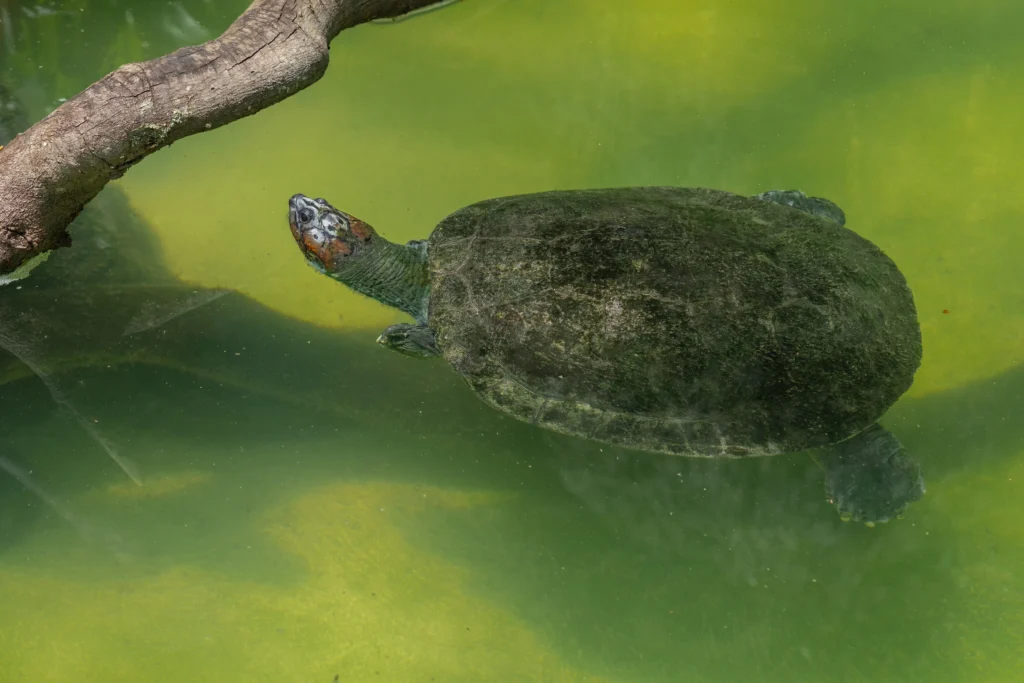
The Amazon rainforest is home to an incredible variety of wildlife, and turtles are an important part of this rich ecosystem. From slow-moving land turtles to freshwater species that spend most of their lives in rivers and flooded forests, Amazon turtles have adapted to many different environments.
Some species are easy to spot along riverbanks, while others spend much of their time hidden in muddy water, under leaves, or among tree roots. Their shells provide protection, but their survival depends on much more than their hard outer covering. Food, water, nesting areas, seasonal flooding, and temperature all play an important role in their lives.
Amazon rainforest turtles also have an important place in the food chain. They eat plants, fruits, insects, and other small organisms, while their eggs and young provide food for birds, fish, mammals, and other predators.
Here is a closer look at the turtles that live in the Amazon, where they are found, what they eat, how they reproduce, and the challenges they face.
What Are Amazon Rainforest Turtles?
Amazon rainforest turtles are turtles that live in or around the Amazon Basin. The region contains many rivers, streams, lakes, swamps, flooded forests, and areas of dry land. Different turtle species have adapted to these different habitats.
Some are mainly aquatic and spend most of their time in rivers and lakes. Others are more comfortable on land and move through the forest looking for food.
The term “Amazon rainforest turtles” does not refer to one particular species. It includes several species that are found in the Amazon region.
Some of the better-known examples include the yellow-spotted Amazon river turtle, South American river turtle, six-tubercled Amazon river turtle, giant South American river turtle, and yellow-footed tortoise.
Each species has its own appearance, behavior, diet, and preferred habitat.
Yellow-Spotted Amazon River Turtle
The yellow-spotted Amazon river turtle is one of the familiar freshwater turtles of South America.
Its scientific name is Podocnemis unifilis. It is also commonly known as the yellow-spotted river turtle because young turtles often have noticeable yellow markings on their heads and shells.
Adults are usually darker and may lose some of the bright coloring seen in younger individuals.
These turtles live in rivers, streams, lagoons, and other freshwater habitats. They can also move onto land, especially when females leave the water to lay eggs.
They are generally omnivorous. Their diet can include aquatic plants, fruits, leaves, and small animals.
Like many Amazon turtles, they are closely connected to the seasonal changes of the rainforest. When water levels rise, they can move through flooded areas and access food and shelter that may not be available during drier periods.
South American River Turtle
The South American river turtle, Podocnemis expansa, is one of the largest freshwater turtles in the Amazon region.
It is sometimes called the giant Amazon river turtle because of its impressive size. Females are much larger than males, which is common among many turtle species.
These turtles spend much of their lives in large rivers and connected water systems.
During the breeding season, females come onto sandy river beaches to lay their eggs. The timing is closely connected to river levels. Nesting areas need to be suitable for eggs to develop without being flooded.
The species has faced serious pressure from human activities, particularly the collection of eggs and adults for food.
Conservation programs have helped protect some nesting areas and support the recovery of local populations.
Giant South American River Turtle
The giant South American river turtle is another important species found in Amazonian waterways.
It is strongly associated with large rivers and beaches where females lay their eggs.
One of the most interesting things about these turtles is their nesting behavior. Many females may come to the same sandy beach during the breeding season. This can result in large groups of turtles gathering in one location.
The young turtles face many dangers after they hatch. They must reach the water quickly while avoiding predators such as birds, fish, mammals, and other animals.
Only a small portion of hatchlings survive to adulthood, which is normal for many turtle species.
Six-Tubercled Amazon River Turtle
The six-tubercled Amazon river turtle, Podocnemis sextuberculata, is another freshwater species found in the Amazon Basin.
It gets its common name from the raised structures, or tubercles, found on the underside of its shell.
It is generally smaller than the giant South American river turtle and is associated with rivers and other freshwater environments.
Like other river turtles, it can leave the water when conditions require it, including during nesting.
Its diet includes plant material and other food sources available in its aquatic environment.
Because it depends on freshwater habitats, changes to rivers and riverbanks can affect its ability to feed and reproduce.
Yellow-Footed Tortoise
Not every turtle found in the Amazon is a river turtle.
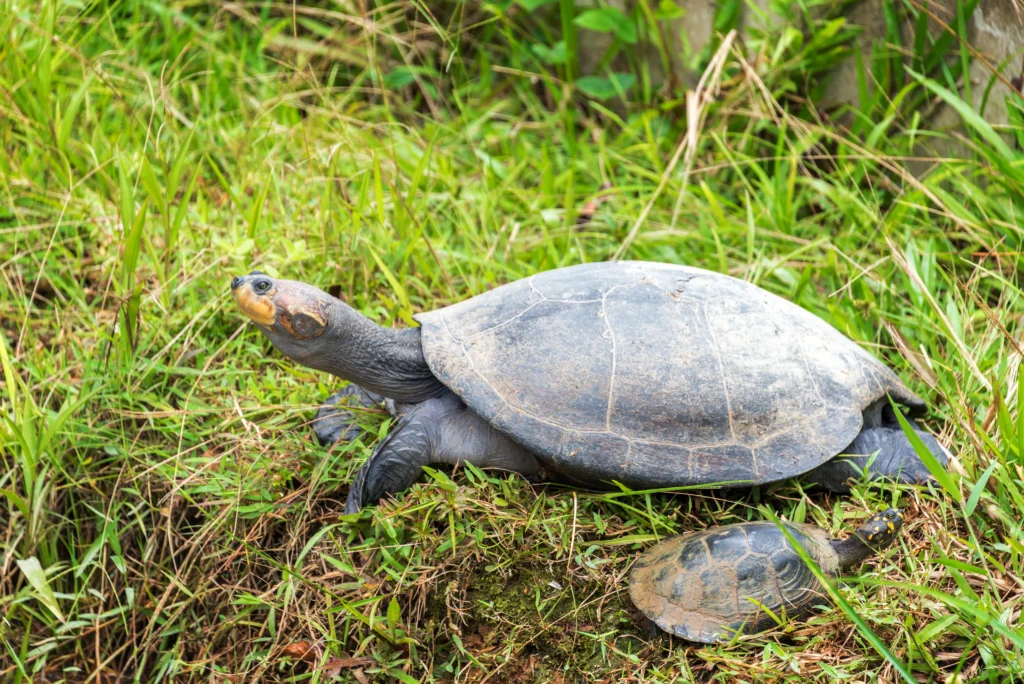
The yellow-footed tortoise, Chelonoidis denticulatus, is primarily a land-dwelling species. It lives on the forest floor and moves through the rainforest in search of food.
It gets its name from the yellow or orange scales that can be found on its legs and feet.
Its shell is usually dark with lighter markings on individual sections.
The yellow-footed tortoise eats a wide range of foods. Fruits are an important part of its diet, but it can also consume leaves, flowers, mushrooms, and other available food.
Unlike aquatic river turtles, it does not need to spend most of its life in water. However, access to water is still important, especially during hot periods.
Where Do Amazon Rainforest Turtles Live?
The Amazon Basin covers a huge area, and turtle habitats can vary considerably.
Freshwater turtles can be found in:
- Large rivers
- Smaller streams
- Floodplain lakes
- Swamps
- Flooded forests
- River channels
- Sandy river beaches
- Slow-moving waterways
Land turtles such as the yellow-footed tortoise live among forest vegetation, fallen leaves, tree roots, and other ground cover.
The annual flooding of the Amazon creates an unusual environment for wildlife. During the wet season, large areas of forest can become flooded. Aquatic turtles can move into these flooded forests to find food.
When the water goes down, they return to rivers, lakes, and other permanent water sources.
What Do Amazon Rainforest Turtles Eat?
The diet of an Amazon turtle depends on its species.
Many freshwater turtles eat a combination of plants and small animals. Their diet may include:
- Aquatic plants
- Leaves
- Fruits
- Seeds
- Flowers
- Insects
- Small aquatic animals
- Carrion
Some species are more plant-focused, while others eat a wider variety of foods.
Land tortoises also eat many types of plant material and fallen fruit found on the forest floor.
The availability of food can change with the seasons. When the forest floods, turtles may gain access to fruits and leaves that fall into the water from trees.
This makes seasonal flooding an important part of the feeding cycle for some species.
Do Amazon Turtles Eat Fruit?
Yes, many Amazon turtles and tortoises eat fruit.
Fallen fruit is an important food source for several forest animals, including land-dwelling tortoises. Freshwater turtles can also take advantage of fruit that falls into rivers and flooded forests.
Eating fruit does more than provide nutrition. Turtles can also help move seeds through the rainforest.
When they eat fruit and later travel to another area, some seeds can be deposited away from the parent plant. This makes turtles part of the wider process of forest regeneration.
How Do Amazon Turtles Reproduce?
Reproduction varies between species, but many Amazon turtles lay eggs on land.
Female river turtles often leave the water and search for suitable sandy areas along riverbanks. Beaches are particularly important because loose sand allows females to dig nests.
The female uses her back legs to create a hole and lays a group of eggs inside it. She then covers the nest with sand and returns to the water.
After that, the eggs develop without direct care from the mother.
The temperature and moisture of the nest can influence the development of the embryos.
When Do Amazon River Turtles Nest?
Nesting is often linked to the seasonal cycle of the Amazon.
Many river turtles nest when water levels are falling and sandy beaches become exposed.
This timing is important. If females lay eggs too early, rising water may flood the nests. If nesting happens too late, environmental conditions may become less suitable.
River levels can therefore influence the success of an entire breeding season.
This is one reason changes to natural river patterns can be a serious concern for freshwater turtles.
How Many Eggs Do Amazon Turtles Lay?
The number of eggs varies by species and by individual females.
Some Amazon river turtles can lay dozens of eggs in a single nest. Larger species may produce particularly large clutches.
A female may also produce more than one clutch during a breeding season under suitable conditions.
However, producing many eggs does not mean that many young turtles will survive.
Eggs can be eaten by predators, damaged by flooding, or affected by unsuitable nesting conditions. Once hatchlings emerge, they face another period of high risk.
How Do Baby Turtles Survive?
Baby turtles are much more vulnerable than adults.
After hatching, young river turtles need to reach the water. Predators may be waiting along the beach, in nearby vegetation, or in the water.
Birds, fish, mammals, and other predators can eat hatchlings.
Young turtles also have smaller bodies and less experience finding food and avoiding danger.
Those that survive eventually grow larger and become less vulnerable to some predators.
This is why protecting nesting beaches is so important. Even small changes to the number of hatchlings that survive can affect turtle populations over many years.
Do Amazon Turtles Have Predators?
Adult turtles have relatively strong protection from their shells, but they are not completely safe from predators.
Eggs and hatchlings face the greatest danger.
Depending on the species and habitat, predators can include:
Humans can also pose a major threat through hunting, egg collection, habitat destruction, and accidental capture.
The shell provides protection, but a turtle cannot simply hide inside it forever. Finding food, nesting, and moving between habitats all expose it to potential danger.
How Do Turtles Survive in the Amazon Rainforest?
Amazon turtles have several adaptations that help them survive.
Their shells provide protection from predators and physical injury. Aquatic species have webbed feet or other adaptations that make swimming easier.
Their ability to eat different types of food can also be useful when food availability changes.
River turtles are especially well adapted to seasonal changes in water levels. They can move between rivers, lakes, and flooded forests as conditions change.
Land tortoises have strong legs that allow them to travel across the forest floor and search for fallen fruit and vegetation.
Their ability to live in different parts of the rainforest helps them take advantage of the resources available in each season.
Why Are Amazon Turtles Important?
Turtles are more important to the rainforest ecosystem than they may first appear.
They are both consumers and prey. By eating plants, fruit, and other organisms, they take part in the movement of energy through the food web.
Fruit-eating turtles and tortoises can also help spread seeds.
River turtles contribute to aquatic ecosystems by feeding on plants and other food sources. Their eggs and young provide food for predators.
Because turtles can live for many years, changes in their population can also provide useful information about the condition of their environment.
A healthy turtle population is closely connected to healthy forests, rivers, beaches, and wetlands.
Threats Facing Amazon Rainforest Turtles
Amazon turtles face several threats, and many are connected to human activity.
Hunting
Some turtles are hunted for their meat. Because large turtles can provide a substantial amount of food, they have historically been targeted in some areas.
Egg Collection
River turtle eggs are collected in some parts of the Amazon. Taking too many eggs reduces the number of young turtles entering the population.
Habitat Loss
Deforestation can affect land turtles by removing forest habitat and changing the conditions they depend on.
River Changes
Dams, mining, pollution, and changes to natural river systems can affect freshwater turtles.
Fishing
Turtles can sometimes become caught accidentally in fishing equipment.
Pollution
Plastic, chemicals, oil, and other pollutants can damage aquatic habitats and affect the animals that live there.
Climate Change
Changes in rainfall, river levels, temperature, and seasonal patterns can influence nesting beaches and food availability.
Conservation Efforts
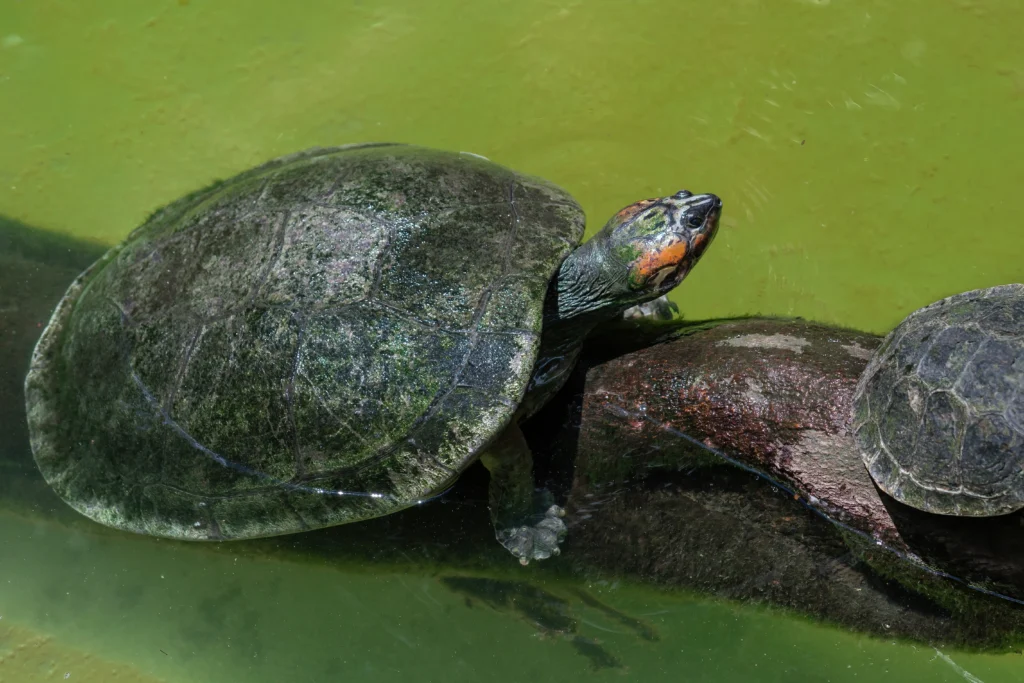
Conservation work for Amazon turtles includes protecting nesting beaches, monitoring populations, reducing illegal hunting, and supporting local communities.
Some conservation programs protect eggs and hatchlings during vulnerable stages of their lives.
Researchers may also track nesting activity, population numbers, movement patterns, and habitat conditions.
Community involvement is especially important. People who live near rivers have a close connection with these animals and can play an important role in protecting nesting sites and reducing unsustainable hunting.
Protecting turtles also requires protecting the wider rainforest and river system.
Can You See Amazon Turtles in the Wild?
Yes, but seeing them is not always easy.
Some freshwater turtles spend much of their time underwater. Others may rest on logs, riverbanks, or rocks where they can be difficult to notice.
Land tortoises move quietly through forest vegetation and may be hidden by leaves and plants.
The best way to observe wildlife is to visit with experienced local guides and follow responsible wildlife-viewing practices.
Turtles should never be chased, touched, fed, or removed from their natural habitat.
Interesting Facts About Amazon Turtles
Amazon turtles have several fascinating characteristics.
Some species can grow surprisingly large despite beginning life as tiny hatchlings.
Many river turtles depend on exposed sandy beaches for nesting.
Some turtles can travel through flooded forests when rising water connects areas that are normally separated.
The Amazon’s seasonal flooding can therefore expand the habitat available to aquatic species.
Land tortoises also play a role in the rainforest by consuming fallen fruit and moving seeds as they travel.
Perhaps the most interesting fact is that Amazon turtles are not all alike. Some are strong swimmers that spend most of their lives in rivers, while others are land animals that rarely enter deep water.
Conclusion
Amazon rainforest turtles are a diverse group of animals that have adapted to life in one of the world’s most complex ecosystems. From large river turtles moving through the Amazon’s waterways to yellow-footed tortoises searching for fruit on the forest floor, each species has a different way of surviving.
Their lives are closely connected to the rainforest and its rivers. Seasonal flooding provides feeding opportunities, sandy beaches provide nesting sites, and the forest supplies food and shelter.
At the same time, these turtles face growing pressure from hunting, egg collection, habitat loss, pollution, changes to rivers, and other environmental threats.
Protecting Amazon rainforest turtles is not only about protecting individual animals. It also means protecting the rivers, forests, wetlands, and nesting beaches they depend on. When these habitats remain healthy, turtles have a much better chance of continuing to thrive in the Amazon for generations to come.