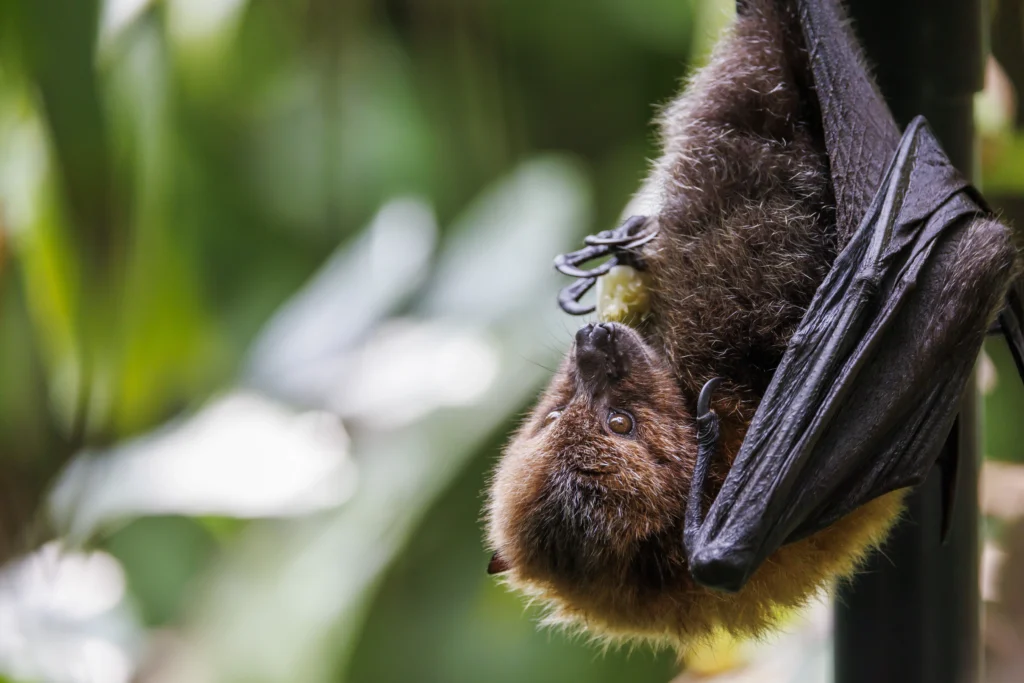
The Amazon rainforest is home to an incredible variety of wildlife, including monkeys, jaguars, colorful birds, frogs, snakes, and thousands of insects. Among its lesser-known animals are bats, which play an important role in keeping the rainforest healthy.
Bats of the Amazon rainforest come in many shapes and sizes. Some feed on insects, while others eat fruit, drink nectar, catch fish, or feed on the blood of other animals. They live in different parts of the forest, from the dense understory to the upper canopy, and often become active after sunset.
Although bats are sometimes misunderstood, they provide valuable benefits to the Amazon ecosystem. They help control insect populations, pollinate flowers, and spread seeds that can grow into new trees and plants.
In this guide, you will learn about the different bats of the Amazon, where they live, what they eat, and why they are important to the rainforest.
Key Takeaways
- The Amazon rainforest is home to many bat species with different sizes, habitats, and feeding habits.
- Amazonian bats eat insects, fruit, nectar, fish, and, in a few species, blood.
- Fruit-eating bats help regenerate the rainforest by spreading seeds to new areas.
- Nectar-feeding bats pollinate certain tropical plants, while insect-eating bats help control insect populations.
- Many bats use echolocation to navigate and locate food in darkness.
- Bats roost in hollow trees, caves, rock crevices, and sheltered vegetation.
- Deforestation, habitat loss, and disturbance of roosting sites can threaten bat populations.
- Most bats are not dangerous when left undisturbed, but people should never handle wild bats.
What Are Bats of the Amazon Rainforest?
Bats are mammals belonging to the order Chiroptera. They are the only mammals capable of sustained powered flight. Their wings consist of thin skin stretched across elongated finger bones.
The Amazon rainforest supports a remarkable diversity of bat species. Different species have adapted to particular foods, habitats, and ways of finding prey. Some have large ears that help them detect sounds, while fruit-eating species may rely heavily on their sense of smell to locate ripe fruit.
Most Amazonian bats are nocturnal, meaning they are active at night. During the day, they rest in places such as hollow trees, caves, rock crevices, and sheltered vegetation. After sunset, they emerge to search for food.
10 Bats Found in the Amazon Rainforest
The Amazon is home to many fascinating bat species. Here are ten examples and the characteristics that make them interesting.
1. Common Vampire Bat
The common vampire bat (Desmodus rotundus) is one of the best-known bats in the Americas. It occurs in parts of the Amazon region and other areas of Central and South America.
Unlike most bats, which eat insects, fruit, or nectar, vampire bats feed on blood. They commonly feed on the blood of mammals, including livestock, and may also feed on wild animals.
These bats have specialized teeth that make a small cut in the skin of their food source. Their saliva contains substances that help keep blood flowing while they feed.
Despite their frightening reputation, common vampire bats are relatively small. They usually avoid people, but they can transmit rabies and other infections through bites. People should never attempt to handle them.
2. Greater Bulldog Bat
The greater bulldog bat (Noctilio leporinus) is an impressive fishing bat found in tropical parts of the Americas, including the Amazon region.
It is often associated with rivers, lakes, ponds, and other bodies of water. Its large feet and long claws help it catch fish near the water’s surface. It can also eat aquatic insects and crustaceans.
This bat uses echolocation to navigate in darkness and locate prey. It may detect tiny disturbances on the water before swooping down to capture a fish.
Its fishing ability makes it one of the most unusual bats in the Amazon rainforest.
3. Seba’s Short-Tailed Bat
Seba’s short-tailed bat (Carollia perspicillata) is a small fruit-eating bat found in tropical forests across Central and South America.
It feeds mainly on fruit, particularly fruits from plants in the pepper family, including Piper species. It often searches for food in forest clearings, along trails, and near areas with abundant fruit.
After eating, the bat may fly to another location and release seeds in its droppings. This helps plants spread beyond the areas where their parent plants grow.
Seba’s short-tailed bat is an important example of how small mammals help maintain rainforest vegetation.
4. Common Long-Tongued Bat
The common long-tongued bat (Glossophaga soricina) is a nectar-feeding species found in tropical parts of the Americas.
It has a long, narrow tongue that helps it reach nectar deep inside flowers. It can also consume pollen and small amounts of fruit or insects.
As it visits flowers to feed, pollen may stick to its face and fur. When the bat visits another flower, some of that pollen is transferred, helping plants reproduce.
Nectar-feeding bats are especially important to plants that open their flowers at night. Their feeding habits connect nocturnal wildlife with the reproduction of tropical plants.
5. Greater Spear-Nosed Bat
The greater spear-nosed bat (Phyllostomus hastatus) is a large bat found in parts of tropical Central and South America, including the Amazon region.
Its broad diet may include insects, fruit, nectar, and pollen. The exact foods it consumes depend on availability and local conditions.
The bat’s prominent, spear-shaped nose leaf is a feature of its appearance. Nose leaves are fleshy structures found in many New World leaf-nosed bats and are associated with the production and direction of sounds used in echolocation.
Because it can feed on different food sources, the greater spear-nosed bat can use a variety of habitats within tropical forests.
6. White-Winged Vampire Bat
The white-winged vampire bat (Diaemus youngi) is another blood-feeding bat found in tropical parts of Central and South America.
It is generally associated with forested habitats and may feed on birds. Like other vampire bats, it has specialized teeth and adaptations for obtaining blood.
Its name comes from the pale areas on its wings, which contrast with the darker parts of its body.
Although vampire bats receive considerable attention, they represent only a small part of the enormous diversity of bats in the Amazon. Most species eat other foods and do not feed on blood.
7. Greater Fishing Bat Relatives and Other Water-Associated Bats
The Amazon contains several bats that forage near rivers, streams, ponds, and flooded forests. One example is the long-legged bat (Macrophyllum macrophyllum), a species that feeds mainly on insects.
Its unusually long legs and large feet help it capture insects near or on the surface of water. It may hunt around ponds and other sheltered aquatic habitats where insects are plentiful.
Water-associated bats are important because they feed on insects that emerge from or gather around aquatic environments.
Their presence also shows how the Amazon’s rivers and wetlands support wildlife beyond fish, amphibians, and birds.
8. Little Yellow-Shouldered Bat
The little yellow-shouldered bat (Sturnira lilium) is a fruit-eating bat found across much of tropical and subtropical Central and South America.
It feeds on a variety of fruits, including fruits from plants in the nightshade family. Its shoulders may show yellowish or orange coloration, although the appearance varies.
By carrying fruit away from the parent plant and dispersing seeds, this bat contributes to the spread of vegetation. This can be particularly helpful in forest gaps and disturbed areas where new plants may become established.
Its diet and adaptable feeding habits make it an interesting member of the wider Amazonian bat community.
9. Tent-Making Bat
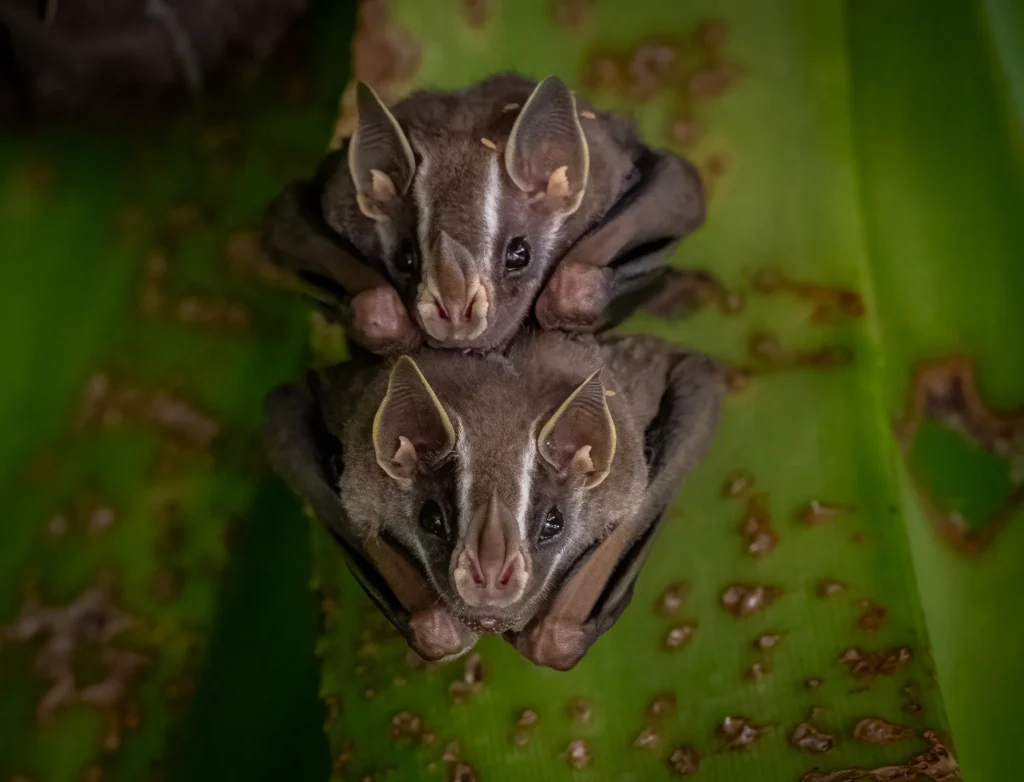
Tent-making bats are a group of tropical American bats known for using leaves as shelters. One example is the Honduran white tent bat (Ectophylla alba), which is found in parts of Central America rather than the Amazon itself. Amazonian forests have their own tent-roosting species, including bats from the genus Uroderma.
These bats modify large leaves by cutting or chewing the veins so that the leaves fold into a sheltered shape. The resulting structure offers protection from rain and sunlight.
Tent-making bats usually eat fruit or other plant-based foods, depending on the species. Their unusual shelters demonstrate how bats adapt to the physical structure of tropical forests.
The exact species found in the Amazon varies by location, so not every tent-making bat is an Amazon native.
10. Greater Fruit-Eating Bat
Several fruit-eating bats live in the Amazon, including species from the genera Artibeus and Platyrrhinus. These bats often have broad faces and strong jaws suited to eating soft fruit.
They may feed on figs and other fruits growing in the forest canopy. Some species also consume flowers or other plant material.
Fruit-eating bats are among the rainforest’s important seed dispersers. They can carry seeds away from parent trees and deposit them in different locations, helping plants spread through the forest.
Because many tropical plants depend on animals to move their seeds, fruit-eating bats contribute to forest regeneration and biodiversity.
Where Do Amazon Rainforest Bats Live?
Bats occupy several habitats throughout the Amazon rainforest. Each offers different food sources and shelter.
Forest Canopy
The canopy is the upper layer of the forest, where tree branches form a dense roof of leaves. Fruit-eating and nectar-feeding bats may travel through this area to find flowers and ripe fruit.
The canopy provides access to food while allowing bats to move between trees.
Forest Understory
The understory lies beneath the canopy. It contains smaller trees, shrubs, vines, and young plants.
Many bats forage in this layer because it provides insects, fruit, and sheltered flight paths. Some species also use the vegetation as cover when moving between feeding areas.
Hollow Trees and Dense Vegetation
Hollow trees and thick vegetation can provide daytime roosting sites. Bats need safe places where they can rest, avoid predators, and raise their young.
Some species roost alone, while others gather in groups. Roosting behavior varies by species and by the availability of suitable shelter.
Caves and Rock Shelters
Some Amazonian bats use caves, rock crevices, and other sheltered spaces. These sites can offer stable conditions and protection from weather.
However, not all bats depend on caves. Many rainforest species rely primarily on trees, leaves, or other natural shelters.
Rivers and Wetlands
Rivers, lakes, and flooded forests attract bats that feed on insects or aquatic prey. Fishing bats are particularly associated with water, while insect-eating bats may hunt above the surface.
These habitats show the close connection between the Amazon’s forests and its freshwater ecosystems.
What Do Bats of the Amazon Eat?
The diet of Amazonian bats varies considerably. Different species have evolved specialized ways to find and consume food.
- Insects: Many bats catch moths, beetles, flies, mosquitoes, and other insects. This helps regulate insect populations.
- Fruit: Fruit-eating bats consume figs, peppers, and other tropical fruits. They also help spread seeds.
- Nectar and pollen: Nectar-feeding bats visit flowers and can transfer pollen between plants.
- Fish and aquatic prey: Fishing bats use their feet and claws to capture fish near the water’s surface. Some species also eat aquatic insects.
- Blood: A small number of species, including vampire bats, feed on blood from other animals.
These different diets allow many bat species to share the same broad environment without relying on exactly the same food sources.
How Do Bats Navigate in the Dark?
Many Amazonian bats use echolocation to move through darkness and find food. They produce high-frequency sounds and listen for the echoes that bounce back from objects.
The echoes provide information about the location, size, movement, and sometimes the texture of nearby objects. This helps bats avoid branches, detect insects, and navigate through dense vegetation.
Some fruit-eating bats also rely strongly on their sense of smell and vision to locate food. The importance of each sense depends on the species and its feeding habits.
Bats are not blind. Their eyesight varies, and many species use vision alongside other senses.
Why Are Bats Important to the Amazon Rainforest?
Bats contribute to the health of the rainforest in several ways.
They Control Insect Populations
Insect-eating bats consume large numbers of insects, including some that damage plants or crops. This natural feeding activity can help regulate insect populations.
Their contribution is especially valuable in a forest with an enormous variety of insects.
They Help Pollinate Plants
Nectar-feeding bats carry pollen between flowers while searching for food. This supports the reproduction of plants that depend on bats for pollination.
Some tropical plants have flowers that open at night, making nocturnal bats important pollinators.
They Spread Seeds
Fruit-eating bats move seeds away from parent plants. Seeds deposited in droppings can grow when conditions are suitable.
This process supports the regeneration of forest vegetation, especially in clearings and disturbed habitats.
They Support Food Webs
Bats are also prey for some predators, including owls, snakes, and other animals. Their role in food webs connects them with many other rainforest species.
Their presence contributes to the ecological relationships that keep the forest functioning.
Are Bats of the Amazon Endangered?
The conservation status of Amazonian bats varies by species. Some are relatively widespread, while others may face greater risks because of habitat loss, hunting, or changes to their environments.
Deforestation is a major concern. When forests are cleared for agriculture, roads, logging, or development, bats can lose roosting sites and feeding areas.
Other threats include the disturbance of caves and roosts, pesticide use that reduces insect prey, and the loss of flowering or fruit-producing plants.
Protecting the Amazon rainforest helps protect bats and the ecological services they provide. Maintaining connected forest habitats, conserving roosting sites, and reducing unnecessary disturbance are important steps.
Can You See Bats in the Amazon Rainforest?
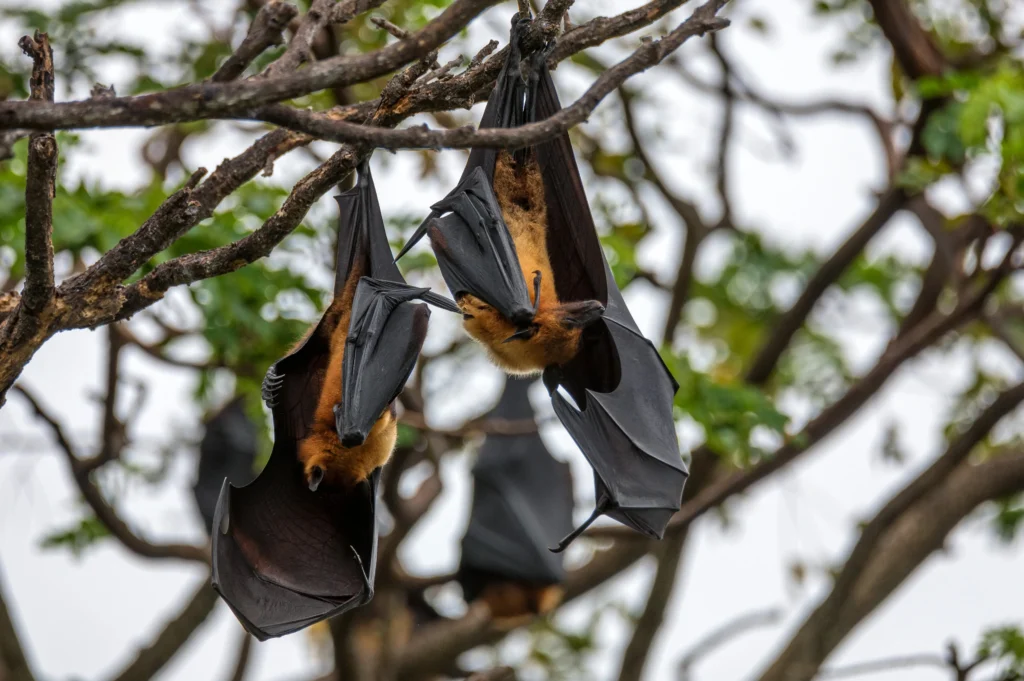
Bats are often easiest to notice around dusk and after dark, when they leave their roosts to search for food. Visitors may see them flying above rivers, around forest edges, or near fruiting trees.
However, identifying individual species in the wild can be difficult. Many bats look similar, move quickly, and are active in low light.
If you are visiting the Amazon with a naturalist guide, ask about responsible ways to observe nocturnal wildlife. Avoid touching bats or entering roosts without expert guidance. Bats should be watched from a safe distance, since handling them can harm the animals and expose people to bites or disease.
Interesting Facts About Amazon Rainforest Bats
- Bats are mammals, not birds, and their wings are formed from skin stretched across elongated fingers.
- Not all bats eat insects. Some specialize in fruit, nectar, fish, or blood.
- Many fruit-eating bats help rainforest plants spread by dispersing seeds.
- Nectar-feeding bats can pollinate flowers that open at night.
- Some bats use echolocation to navigate and find prey in darkness.
- Bats may roost in hollow trees, caves, crevices, or specially modified leaves.
- Fishing bats use their large feet and claws to catch prey near the water’s surface.
- Bats are important members of rainforest food webs.
FAQs About Bats of the Amazon Rainforest
1. How many species of bats live in the Amazon rainforest?
The Amazon rainforest supports hundreds of bat species. The exact number depends on the boundaries of the Amazon region and ongoing research, as scientists continue to study bat diversity.
2. What is the largest bat found in the Amazon rainforest?
The greater bulldog bat (Noctilio leporinus) is one of the larger bats associated with Amazonian waterways. It has a strong body, large feet, and long claws that help it catch fish.
3. Do Amazon rainforest bats drink water?
Yes. Many bats drink water, often by swooping close to the surface of a river, lake, or pond. Some may also obtain moisture from the fruit, nectar, or prey they consume.
4. Do bats in the Amazon live alone or in groups?
It depends on the species. Some bats roost alone or in small groups, while others form colonies that may contain dozens, hundreds, or more individuals.
5. How do Amazonian bats raise their babies?
Female bats generally give birth to live young and feed them milk. Depending on the species, mothers may carry their babies or leave them at a roost while they search for food.
6. Can bats fly in heavy rain?
Some bats can continue flying during light rain, but heavy rain can make flying and finding food more difficult. Weather conditions and species-specific behavior influence when bats leave their roosts.
7. Are bats active throughout the night?
Many Amazonian bats are active at night, but their activity patterns differ. Some forage soon after sunset, while others may become active later or make several trips between their roosts and feeding areas.
8. Do Amazon rainforest bats migrate?
Some bat species move between areas as food availability and seasonal conditions change. However, movement patterns vary, and many Amazonian species remain within relatively limited home ranges rather than undertaking long-distance migrations.
9. How can scientists identify bat species in the Amazon?
Scientists use characteristics such as body size, fur color, skull shape, teeth, ears, and nose structure. They may also study echolocation calls, DNA, and behavior to distinguish similar species.
10. What should you do if you find a bat inside your home or lodge in the Amazon?
Do not touch, chase, or attempt to catch it with your bare hands. Keep people and pets away, and contact trained wildlife staff or local animal authorities for safe removal. If someone has been bitten or scratched, or may have had direct contact with a bat, seek prompt medical advice because rabies exposure may require urgent treatment.
Conclusion
The bats of the Amazon rainforest are a diverse group of mammals with an important place in the ecosystem. From fruit-eating bats that spread seeds to nectar-feeding species that pollinate flowers and insect-eating bats that help control insects, each group contributes in its own way.
Their variety also reveals how closely connected the Amazon’s forests, rivers, plants, and animals are. Protecting rainforest habitats helps preserve these remarkable mammals and the natural processes they support.
Although bats are often overlooked compared with larger Amazon animals, they are an essential part of the rainforest’s biodiversity.