The Amazon rainforest is one of the most incredible natural places on Earth. It is full of life, color, and mystery. Among the many creatures that live there, snakes are some of the most fascinating. They are often feared, misunderstood, and surrounded by myths.
Many people think all snakes are dangerous, but that is not true. Some snakes are venomous, some are harmless, and a very small number can even be considered poisonous. Understanding these differences is very important, especially if you are interested in wildlife or planning to visit the Amazon.
In this guide, you will learn about venomous, poisonous, and non-venomous snakes, their behavior, their role in nature, and how to stay safe around them.
Why the Amazon Has So Many Snakes
The Amazon rainforest is the perfect home for snakes. It has everything they need to survive and grow.
The climate is warm throughout the year. Since snakes are cold-blooded animals, they depend on heat from their surroundings. The warm weather helps them stay active.
The rainforest is also very humid, which is ideal for reptiles. Water is everywhere, including rivers, swamps, and marshes. Many snakes, like the anaconda, depend heavily on water.
Food is another major reason. The Amazon is full of animals like frogs, birds, rodents, and fish. This gives snakes a constant supply of prey.
The dense vegetation provides hiding places. Snakes can easily blend into leaves, branches, or muddy water. This helps them hunt and also avoid predators.
Understanding Snake Categories
Snakes can be grouped into three main categories:
- Venomous snakes
- Poisonous snakes
- Non-venomous snakes
Let us understand each of these clearly.
Venomous Snakes
Venomous snakes are those that inject venom into their prey or enemies using fangs.
Venom is a special kind of toxin. It helps snakes hunt and defend themselves. When a venomous snake bites, the venom enters the body and affects the nervous system, blood, or muscles.
Some venoms cause paralysis, while others damage tissues or affect blood clotting.
Common Venomous Snakes in the Amazon
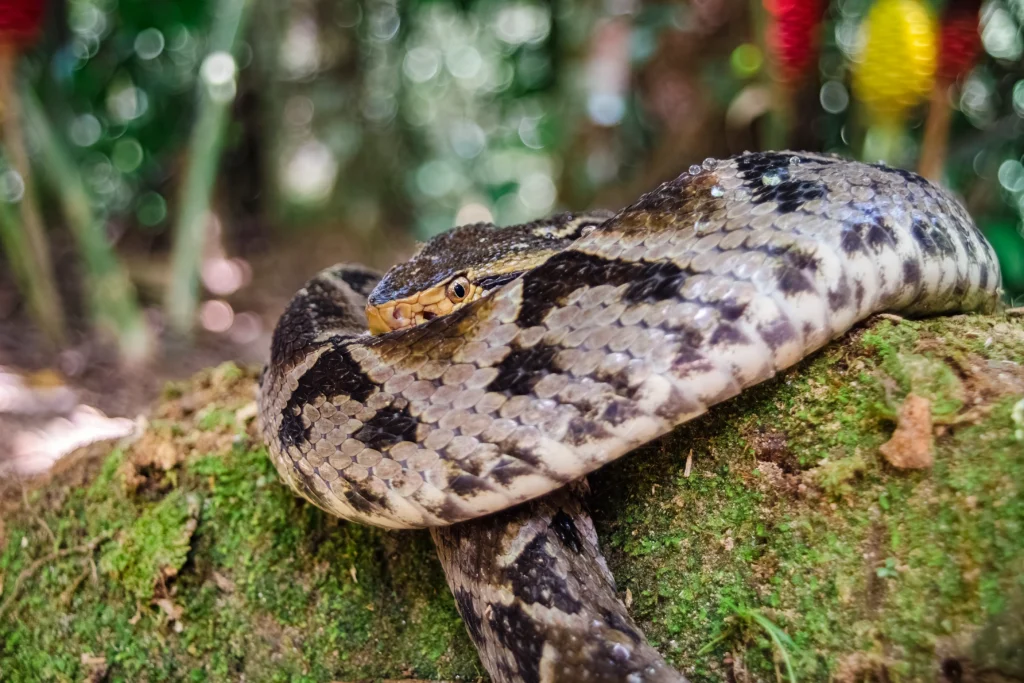
Fer-de-lance
This is one of the most dangerous snakes in the Amazon. It is responsible for many snakebite cases.
It is well camouflaged and often found near human areas. Its venom is strong and can cause serious injury if not treated quickly.
Bushmaster
The bushmaster is the largest venomous snake in the Americas. It lives deep in the forest.
It is not aggressive but can be dangerous if disturbed. Its venom is powerful, but it prefers to avoid humans.
Coral Snake
Coral snakes are known for their bright red, black, and yellow bands.
Their venom affects the nervous system. However, they are shy and rarely bite unless handled.
Poisonous Snakes
Poisonous snakes are very rare. A snake is considered poisonous if it is harmful when you touch it or eat it.
Unlike venomous snakes, poisonous ones do not inject toxins through bites. Instead, the toxin is absorbed through the skin or digestion.
In the Amazon, there are very few snakes that can truly be called poisonous. This is why the term is often misunderstood.
Many people incorrectly call venomous snakes poisonous, but they are different.
Non-Venomous Snakes
Non-venomous snakes do not use venom to kill their prey. Instead, they rely on strength, speed, or stealth.
Many of them use a method called constriction. They wrap their bodies around prey and squeeze until it cannot breathe.
Common Non-Venomous Snakes in the Amazon
Anaconda
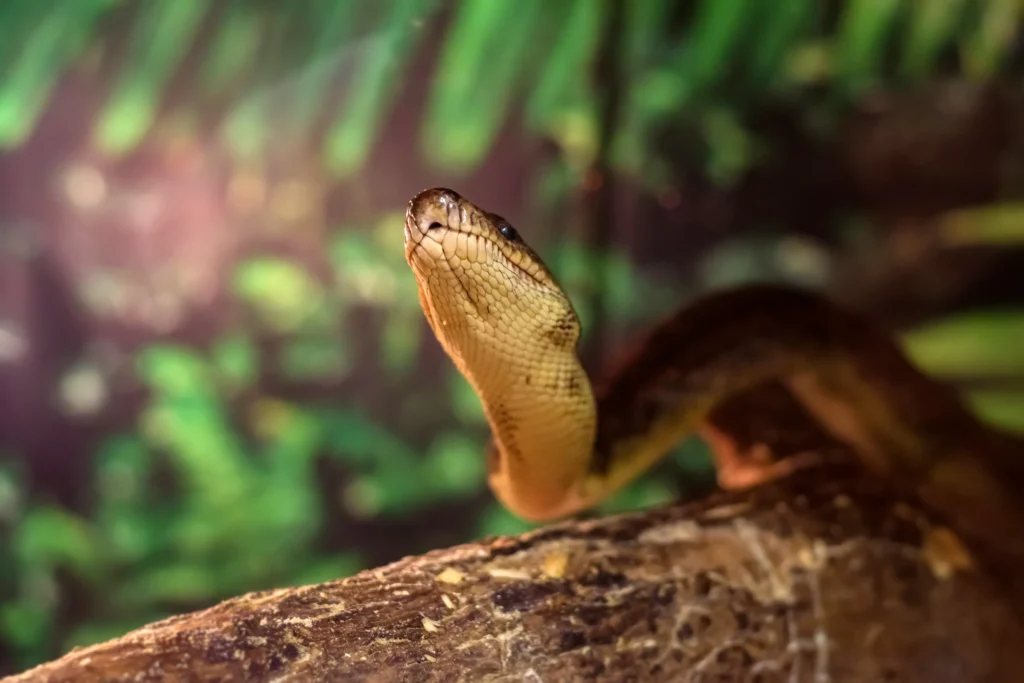
The anaconda is one of the largest snakes in the world. It lives mostly in water.
It kills prey by constriction and can eat large animals like deer or capybaras. Despite its size, it rarely attacks humans.
Boa Constrictor
The boa constrictor is another strong snake. It lives both on land and in trees.
It feeds on birds, rodents, and small mammals. It is not dangerous to humans unless provoked.
Tree Snakes
Many tree snakes in the Amazon are non-venomous. They are thin and fast.
They feed on birds, eggs, and small animals. Their green color helps them stay hidden among leaves.
Key Differences Between the Three Types of Snakes
Understanding the difference between venomous, poisonous, and non-venomous snakes is important.
- Venomous snakes inject toxin through bites
- Poisonous snakes harm through touch or eating
- Non-venomous snakes have no venom
A simple way to remember:
- “Venomous” means “injected.”
- “Poisonous” means “absorbed.”
- Non-venomous means harmless in terms of venom
How Snakes Hunt
Snakes are skilled hunters. They use different techniques depending on their type. Venomous snakes bite and inject venom. This either kills or paralyzes the prey.
Non-venomous snakes often use constriction. They wrap around their prey and squeeze. Some snakes rely on ambush. They stay still and wait for prey to come close.
Others actively search for food. Some species can sense heat. This helps them detect warm-blooded animals even in darkness.
What Amazon Snakes Eat
Snakes are carnivores. Their diet depends on their size. Small snakes eat insects, frogs, and small lizards. Medium snakes eat birds, eggs, and rodents.
Large snakes like anacondas can eat deer, monkeys, and even caimans. Snakes swallow their food whole. Their jaws are flexible and can stretch widely.
After eating a big meal, they may not eat again for weeks.
Movement and Adaptation
Snakes have no legs, but they are excellent movers.
They use muscles and scales to move smoothly across different surfaces.
In the Amazon:
- On land, they slide through leaves
- In water, they swim with ease
- In trees, they wrap around branches
This ability allows them to live in different environments.
Defense Mechanisms
Snakes have several ways to protect themselves. Some rely on camouflage to hide. Others use warning colors to scare predators.
Venomous snakes may bite if threatened. Non-venomous snakes may hiss or try to escape. Some release a foul smell to discourage attackers. Most snakes prefer to avoid danger rather than fight.
Are Amazon Snakes Dangerous to Humans
The Amazon has many venomous snakes, but attacks on humans are not common. Most snakes do not see humans as prey. They bite only when they feel threatened.
Many accidents happen when people step on snakes or try to handle them. With proper care and awareness, the risk is low.
Life Cycle of Snakes
Snakes reproduce in two main ways.
Some lay eggs, while others give birth to live young.
Baby snakes are independent from birth. They must find food and protect themselves.
Snakes grow by shedding their skin. This process happens several times during their life.
Their lifespan varies depending on species.
Role of Snakes in the Ecosystem
Snakes are very important for the environment. They control populations of rodents and other animals. This helps maintain balance.
They are also part of the food chain. Larger animals may eat snakes. Without snakes, the ecosystem would become unbalanced.
Common Myths About Amazon Snakes
There are many false beliefs about snakes.
Myth 1: All snakes are dangerous
Many are harmless and avoid humans.
Myth 2: Snakes chase people
They usually try to escape.
Myth 3: “Poisonous” and “venomous” mean the same
They are completely different.
Myth 4: Big snakes always attack humans
Most large snakes avoid humans. Understanding these myths helps reduce fear.
Threats to Amazon Snakes
Snakes face many threats today. Deforestation is a major problem. As forests are cut down, snakes lose their homes.
Pollution affects water and land. This harms both snakes and their prey. Many snakes are killed out of fear.
Climate change also affects their environment.
Conservation Efforts
- Efforts are being made to protect snakes and their habitats.
- Protected areas help preserve forests.
- Education programs teach people about the importance of snakes.
- Scientists study snakes to understand how to protect them.
- Local communities are also becoming more aware.
Safety Tips for Visitors
If you visit the Amazon, safety is important.
- Watch where you walk.
- Wear proper shoes.
- Avoid touching unknown animals.
- Do not disturb snakes. Stay calm if you see one.
- Always travel with a guide.
- Respect nature and maintain distance.
Interesting Facts
Some snakes can stay underwater for several minutes.
Many can go long periods without food. Their jaws can stretch widely to swallow large prey.
Some are active at night, while others are active during the day. Each species has unique adaptations.
Human and Snake Relationship
Humans and snakes often share the same space in the Amazon.
Snakes help control pests like rats. However, fear leads to unnecessary killing.
Education can help people understand their importance.
The Future of Amazon Snakes
The future of snakes depends on how we treat the environment. If forests continue to be destroyed, many species may disappear.
If conservation efforts succeed, snakes will continue to thrive. Protecting snakes also means protecting the Amazon.
FAQs About Amazon Snakes
1. What is the biggest snake ever found in the Amazon?
The largest snake ever recorded in the Amazon is the green anaconda, with some reports suggesting lengths over 25 feet. However, many extreme size claims are exaggerated and not scientifically confirmed.
2. What is the longest snake ever recorded in history?
The longest snake ever recorded was a reticulated python, not from the Amazon, measuring over 30 feet. It holds the world record for length among snakes.
3. How heavy can an anaconda get?
A large green anaconda can weigh more than 200 kilograms, making it the heaviest snake in the world.
4. Can snakes in the Amazon swallow humans?
While very rare and mostly theoretical, extremely large snakes like anacondas could potentially swallow a human. However, there are almost no confirmed real cases in the wild.
5. Do Amazon snakes have natural predators?
Yes, young snakes can be eaten by birds, caimans, and other animals. Adult snakes may be attacked by jaguars or large caimans.
6. How long can snakes live in the Amazon?
Depending on the species, snakes can live from 10 to 30 years and sometimes even longer in protected environments.
7. Can snakes climb trees in the Amazon?
Yes, many Amazon snakes are excellent climbers. Tree snakes spend most of their lives in branches hunting birds and eggs.
8. Do snakes make sounds?
Snakes cannot make sounds like mammals, but they can hiss by pushing air through their bodies as a warning.
9. Are there snakes in the Amazon that can fly?
Some snakes can glide short distances between trees by flattening their bodies, but they do not truly fly.
10. What is the rarest snake in the Amazon?
There are several rare and lesser-known species that are not often seen due to their secretive nature and remote habitats. Many are still being studied by scientists.
Conclusion
Snakes of the Amazon rainforest are diverse, important, and often misunderstood.
They can be venomous, poisonous, or non-venomous, but most are not dangerous to humans if left alone.
Understanding these categories helps reduce fear and confusion.
Snakes play a vital role in maintaining balance in nature.
By learning about them and respecting their place in the ecosystem, we can help ensure that these fascinating creatures continue to live in the Amazon for generations to come.