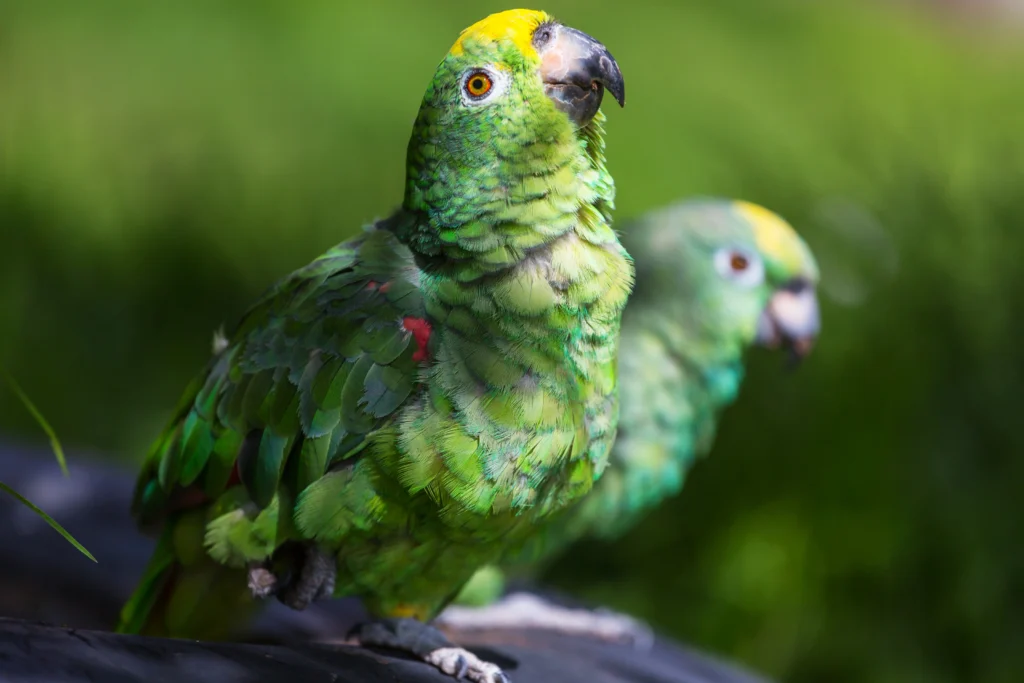
The Amazon Rainforest is one of the most biodiverse places on Earth. Stretching across several South American countries, it is home to thousands of animal species, including some of the world’s most colorful and intelligent birds. Among these birds are Amazon parrots, a group of parrots known for their bright plumage, strong social bonds, and remarkable vocal abilities.
While many people use the term “Amazon parrot” to describe parrots belonging to the genus Amazona, the Amazon Rainforest is home to a variety of parrot species that thrive within its dense forests, river systems, and tropical habitats. These birds play an important role in maintaining the health of the rainforest ecosystem through seed dispersal and other ecological functions.
This guide explores the parrots found in the Amazon Rainforest, their characteristics, habitats, diets, behavior, and importance to one of the world’s most valuable ecosystems.
What Are Amazon Parrots?
Amazon parrots are medium to large parrots known for their intelligence, strong beaks, and vibrant colors. Most species are primarily green, with additional markings in yellow, blue, red, orange, or purple.
These parrots are famous for their ability to mimic sounds and human speech. They are highly social birds that often live in flocks and communicate through a variety of calls and vocalizations.
Although Amazon parrots are found in different parts of Central and South America, several species occur within the Amazon Rainforest and its surrounding regions.
The Amazon Rainforest
The Amazon Rainforest covers large areas of:
- Brazil
- Peru
- Colombia
- Ecuador
- Bolivia
- Venezuela
- Guyana
- Suriname
- French Guiana
This vast tropical forest provides ideal conditions for parrots because it offers:
- Abundant food
- Nesting sites
- Warm temperatures
- Dense vegetation
- Protection from predators
The diversity of habitats within the rainforest supports numerous parrot species with different ecological needs.
Why Are Parrots Important in the Amazon?
Parrots play a vital role in maintaining healthy rainforest ecosystems.
Seed Dispersal
Many parrots consume fruits and later disperse seeds throughout the forest.
This process helps plants reproduce and contributes to forest regeneration.
Forest Diversity
By spreading seeds across different locations, parrots help maintain plant diversity.
Ecological Balance
Parrots are important members of the food web and interact with many other species within the rainforest ecosystem.
Without parrots, some plant species could struggle to spread effectively.
Common Amazon Rainforest Parrots
Several parrot species live within the Amazon basin. Some are among the most recognizable birds in South America.
Mealy Amazon Parrot
The Mealy Amazon is one of the largest Amazon parrot species.
Characteristics include:
- Predominantly green plumage
- Pale facial markings
- Strong curved beak
- Large body size
These parrots are often found in forest canopies and travel in noisy flocks.
Their diet consists primarily of fruits, seeds, nuts, and vegetation.
Yellow-Crowned Amazon
The Yellow-Crowned Amazon is known for the bright yellow patch on its head.
Key features include:
- Green body
- Yellow crown
- Intelligent behavior
- Strong vocal abilities
These parrots are highly social and frequently gather in groups.
Orange-Winged Amazon
The Orange-Winged Amazon is one of the most widespread Amazon parrots.
Its name comes from the orange coloration visible on its wings during flight.
Characteristics include:
- Green plumage
- Orange wing markings
- Blue facial feathers
- Adaptable behavior
This species can be found in forests, woodland areas, and river-edge habitats.
Festive Amazon
The Festive Amazon is a colorful species associated with Amazonian river systems.
Distinctive traits include:
- Green body
- Red lower back
- Blue facial feathers
- Red tail markings
They are often observed near waterways and flooded forests.
Blue-Fronted Amazon
Although found in parts of South America beyond the Amazon basin, some populations occur near Amazonian habitats.
They are recognized by:
- Blue forehead
- Yellow face
- Bright green body
- Excellent vocal skills
This species is popular among bird enthusiasts because of its intelligence and personality.
Physical Characteristics of Amazon Parrots
Amazon parrots share several common features.
Strong Beaks
Their powerful curved beaks help them crack:
- Nuts
- Seeds
- Fruits
The beak is one of their most important tools for survival.
Zygodactyl Feet
Amazon parrots have two toes facing forward and two facing backward.
This arrangement helps them:
- Climb branches
- Hold food
- Navigate trees efficiently
Bright Plumage
Most species are primarily green, which provides camouflage among rainforest foliage.
Additional colorful markings help distinguish different species.
Excellent Vision
Parrots possess strong eyesight that helps them locate food and detect predators.
Diet and Feeding Habits
Amazon parrots are primarily herbivorous.
Their diet commonly includes:
- Fruits
- Seeds
- Nuts
- Berries
- Flowers
- Leaves
- Plant buds
Some species may occasionally consume insects or other small food items.
Feeding in the Canopy
Many parrots spend much of their time feeding high in the forest canopy.
The upper levels of the rainforest provide abundant fruits and seeds.
Seasonal Feeding
Food availability changes throughout the year.
Parrots often travel to different areas in search of seasonal food resources.
Their ability to adapt to changing food supplies helps ensure survival.
Social Behavior
Amazon parrots are highly social birds.
Living in Flocks
Many species travel and forage in groups.
Flock living provides benefits such as:
- Increased protection
- Better food detection
- Social interaction
Communication
Parrots communicate through:
- Calls
- Screeches
- Whistles
- Body language
These vocalizations help maintain contact among flock members.
Pair Bonds
Many Amazon parrots form strong pair bonds.
Mated pairs often remain together for long periods and cooperate in raising offspring.
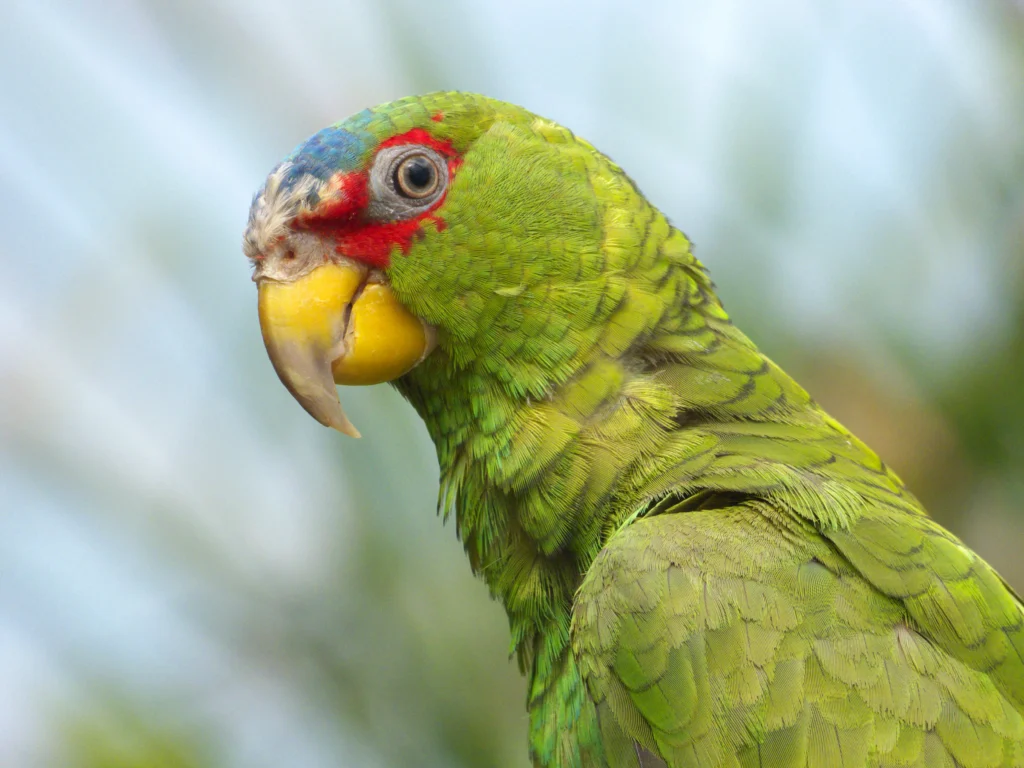
Intelligence of Amazon Parrots
Amazon parrots are considered among the most intelligent bird species.
They demonstrate:
- Problem-solving skills
- Memory
- Learning ability
- Complex communication
Their intelligence allows them to adapt to changing environments and locate resources efficiently.
Some species are particularly well known for their ability to mimic sounds and human speech.
Breeding and Nesting
Breeding usually occurs when food resources are plentiful.
Nest Sites
Amazon parrots typically nest in:
- Tree cavities
- Hollow trunks
- Natural openings in large trees
These locations provide protection from predators and weather.
Eggs
Females generally lay a small clutch of eggs.
The eggs are incubated until hatching.
Raising Chicks
Both parents often participate in feeding and protecting young birds.
Chicks remain dependent on their parents until they develop the ability to fly and forage independently.
Predators
Although parrots are skilled fliers, they face threats from several predators.
Common predators include:
- Hawks
- Eagles
- Snakes
- Wild cats
Young birds and eggs are particularly vulnerable.
Living in flocks helps reduce predation risks through increased vigilance.
Adaptations for Rainforest Life
Amazon parrots possess several adaptations that help them thrive.
Powerful Flight
Strong wings allow them to travel long distances between feeding areas.
Specialized Beaks
Their beaks can process a wide variety of plant materials.
Social Intelligence
Group living improves survival and resource discovery.
Camouflage
Green plumage helps them blend into dense rainforest vegetation.
These adaptations contribute to their success within one of the world’s most complex ecosystems.
Life in the Amazon Rainforest
The Amazon Rainforest is one of the most challenging and diverse environments on Earth. Amazon parrots have evolved to thrive within this complex ecosystem.
The rainforest consists of multiple layers, including:
- Forest floor
- Understory
- Canopy
- Emergent layer
Most Amazon parrots spend much of their time in the canopy, where food is abundant and visibility is greater.
The dense vegetation provides shelter, nesting opportunities, and protection from many ground-based predators.
Daily Activities of Amazon Parrots
Amazon parrots follow daily routines that help them meet their survival needs.
Morning Feeding
Many parrots begin the day by searching for food.
Flocks often leave their roosting sites early in the morning and travel to feeding areas.
Social Interaction
Throughout the day, parrots communicate with flock members using calls and body language.
Social interactions help strengthen bonds within the group.
Grooming
Parrots spend time preening their feathers to keep them clean and in good condition.
Healthy feathers are important for insulation and flight.
Evening Roosting
As daylight fades, parrots gather at communal roosting sites where they rest for the night.
These gatherings can involve dozens or even hundreds of birds.
How Amazon Parrots Communicate
Communication is a key part of parrot life.
Amazon parrots use a variety of sounds to interact with one another.
Contact Calls
These calls help flock members stay connected while flying or feeding.
Alarm Calls
Parrots produce warning calls when predators are nearby.
These sounds alert other birds to potential danger.
Pair Communication
Mated pairs often use specific vocalizations to maintain their bond.
Group Signals
Large flocks use vocal communication to coordinate movements and locate food sources.
Their communication systems are highly developed and contribute to their social success.
The Role of Amazon Parrots in Forest Regeneration
Amazon parrots contribute significantly to the health of rainforest ecosystems.
Seed Distribution
Many fruits consumed by parrots contain seeds.
As parrots travel through the forest, they help distribute these seeds to new areas.
Plant Diversity
Seed dispersal supports the growth of various plant species throughout the rainforest.
Ecosystem Stability
Healthy parrot populations contribute to the long-term stability and resilience of forest ecosystems.
Their ecological role extends far beyond simply consuming fruits and seeds.
Threats Facing Amazon Parrots
Despite their adaptability, Amazon parrots face numerous challenges.
Deforestation
One of the greatest threats is habitat loss.
Large areas of rainforest are cleared for:
- Agriculture
- Cattle ranching
- Infrastructure development
- Logging
The loss of mature trees reduces both feeding and nesting opportunities.
Illegal Wildlife Trade
Many parrot species are targeted for the pet trade.
Capturing wild birds can reduce local populations and disrupt breeding success.
Climate Change
Changes in rainfall patterns and temperatures can affect food availability and habitat quality.
Long-term climate shifts may alter the distribution of both parrots and the plants they depend on.
Habitat Fragmentation
When forests become divided into smaller patches, parrots may struggle to find suitable nesting sites and food sources.
Fragmented habitats can also isolate populations.
Conservation Efforts
Conservation organizations and governments are working to protect Amazon parrots and their habitats.
Protected Areas
National parks and protected reserves help preserve important rainforest habitats.
These areas provide safe environments for wildlife.
Habitat Restoration
Tree planting and forest restoration projects help rebuild degraded habitats.
Anti-Trafficking Measures
Many countries have strengthened laws against illegal wildlife trade.
Enforcement efforts help protect vulnerable parrot populations.
Scientific Research
Researchers continue studying Amazon parrots to better understand their ecology, behavior, and conservation needs.
Scientific information supports more effective management strategies.
Interesting Facts About Amazon Parrots
Amazon parrots are full of fascinating characteristics.
They Can Live for Decades
Many Amazon parrots have relatively long lifespans compared to other bird species.
Some individuals may live for several decades under favorable conditions.
They Have Excellent Memories
Their intelligence allows them to remember feeding locations and recognize social relationships within their flocks.
They Are Strong Fliers
Amazon parrots can travel considerable distances while searching for food and nesting areas.
They Form Lasting Bonds
Many species establish long-term pair relationships.
They Are Highly Vocal
Their loud calls can often be heard across large sections of rainforest.
They Help Maintain Forest Health
Through seed dispersal and ecological interactions, they contribute directly to rainforest regeneration.
Birdwatching and Ecotourism
Amazon parrots are popular among birdwatchers visiting South America.
Their bright colors, active behavior, and vocal nature make them exciting birds to observe.
Common birdwatching locations include:
- Amazon rainforest lodges
- Protected reserves
- National parks
- River systems
Responsible ecotourism helps support conservation efforts while providing economic benefits to local communities.
Visitors are encouraged to observe wildlife respectfully and avoid disturbing natural behaviors.
How to Identify Amazon Parrots
Several characteristics can help identify Amazon parrots in the wild.
Body Shape
They typically have stocky bodies and short tails compared to some other parrot groups.
Green Plumage
Most species display predominantly green feathers.
Colorful Markings
Different species can be identified by distinctive patches of:
- Yellow
- Blue
- Red
- Orange
Strong Curved Beaks
Their powerful beaks are adapted for cracking hard foods.
Loud Vocalizations
Amazon parrots are often easier to hear than to see in dense rainforest environments.
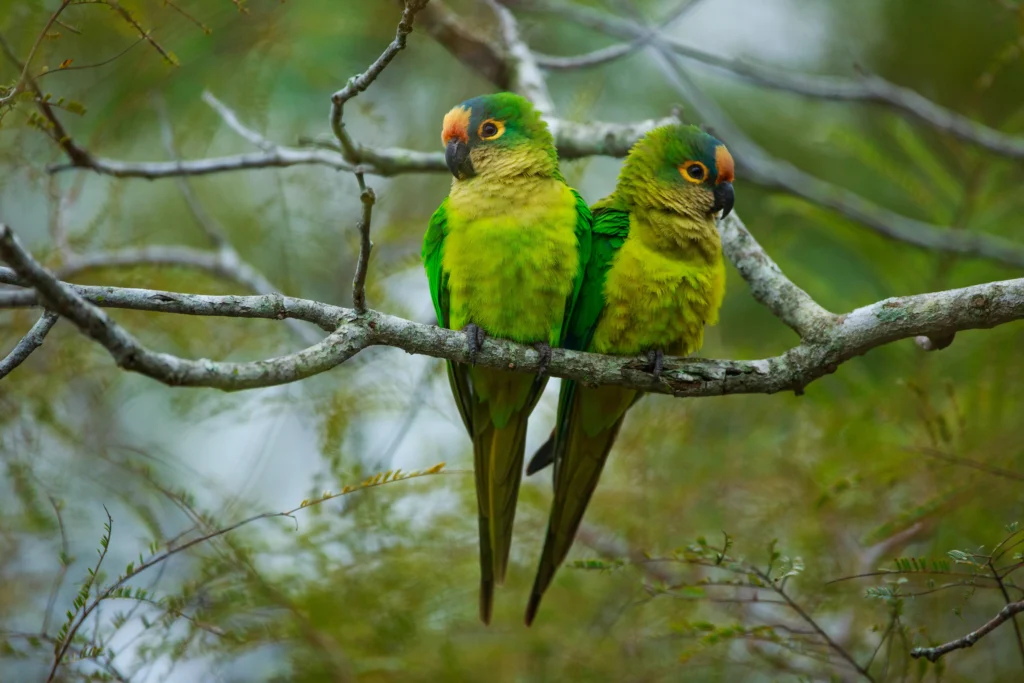
Why Amazon Parrots Matter
Amazon parrots are more than colorful rainforest birds.
They are important indicators of ecosystem health.
Healthy parrot populations often reflect healthy forests because these birds depend on mature trees, diverse plant communities, and abundant food resources.
Their presence supports ecological processes that benefit countless other species.
By protecting parrots, conservationists also help protect entire rainforest ecosystems.
Future Challenges
The future of Amazon parrots depends largely on the conservation of the Amazon Rainforest.
Key challenges include:
- Ongoing deforestation
- Habitat degradation
- Climate change
- Illegal wildlife trade
- Human expansion
Addressing these issues requires cooperation among governments, conservation groups, scientists, and local communities.
Long-term protection efforts are essential to ensure that future generations can continue to enjoy these remarkable birds.
What Can We Learn From Amazon Parrots?
Amazon parrots demonstrate the importance of adaptation, intelligence, and social cooperation.
- Their ability to thrive in complex rainforest environments highlights the value of biodiversity.
- They also remind us that every species plays a role in maintaining healthy ecosystems.
- Protecting these birds means protecting the forests that support countless forms of life.
Their story emphasizes the connection between wildlife conservation and environmental sustainability.
FAQs About Amazon Parrots
Are Amazon parrots found only in the Amazon Rainforest?
No. While several species live in the Amazon Rainforest, Amazon parrots can also be found in other parts of Central and South America depending on the species.
Which Amazon parrot is the largest?
The Mealy Amazon is generally considered one of the largest Amazon parrot species.
Do Amazon parrots migrate?
Most Amazon parrots do not undertake long-distance migrations, but they may move seasonally in search of food and suitable habitat.
How many Amazon parrot species live in the Amazon basin?
Several Amazon parrot species occur within the Amazon basin, though the exact number varies depending on species classification and geographic range.
Why are Amazon parrots usually green?
Their green plumage helps them blend into rainforest vegetation, providing natural camouflage from predators.
Can Amazon parrots recognize individual birds?
Yes. Their intelligence and social behavior suggest they can recognize mates, family members, and other flock members.
What is the main food source for Amazon parrots?
Fruits, seeds, nuts, berries, and plant materials make up the majority of their diet.
Are Amazon parrots endangered?
Conservation status varies by species. Some populations remain stable, while others face threats from habitat loss and illegal trade.
How do Amazon parrots protect themselves from predators?
They rely on flock behavior, alarm calls, camouflage, and strong flight abilities to avoid predators.
Why are Amazon parrots important to rainforest ecosystems?
They help disperse seeds, support plant diversity, and contribute to the overall health and regeneration of rainforest habitats.
Conclusion
Amazon parrots are among the most iconic birds of the Amazon Rainforest. Known for their intelligence, vibrant colors, strong social bonds, and impressive vocal abilities, they represent some of the most fascinating wildlife found in South America.
Several species, including the Mealy Amazon, Orange-Winged Amazon, Yellow-Crowned Amazon, and Festive Amazon, thrive within Amazonian habitats and contribute significantly to the health of rainforest ecosystems. Through seed dispersal, forest regeneration, and ecological interactions, these birds play an essential role in maintaining biodiversity.
Despite facing threats such as habitat loss, climate change, and illegal wildlife trade, conservation efforts continue to work toward protecting both Amazon parrots and the forests they call home.
As symbols of the incredible biodiversity of the Amazon Rainforest, these parrots remind us of the importance of preserving natural habitats for future generations. Understanding and protecting Amazon parrots is not only important for the birds themselves but also for the long-term health of one of the world’s most valuable ecosystems.