The Amazonian manatee is one of the most unusual mammals found in the Amazon rainforest. Unlike many people imagine when they hear the word manatee, this species does not live mainly in the ocean. It is a freshwater animal that spends its entire life in rivers, lakes, lagoons, flooded forests, and other waterways across the Amazon Basin.
Its scientific name is Trichechus inunguis. It belongs to the order Sirenia, the same group that includes other living manatees and the dugong.
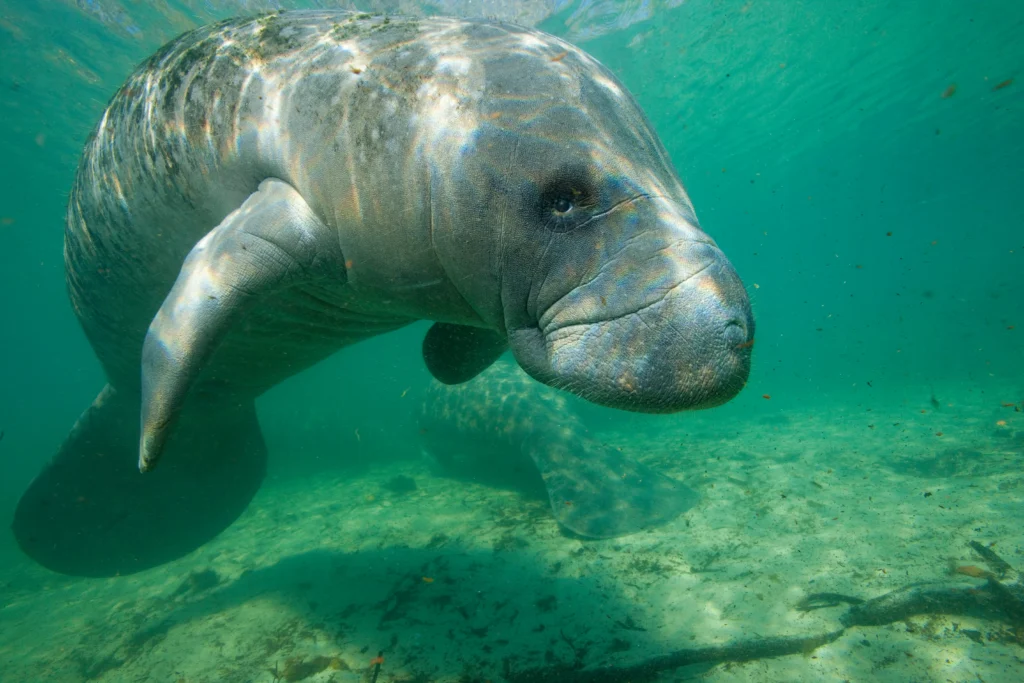
The Amazonian manatee is a large, slow-moving plant eater. It has a rounded body, paddle-like flippers, a broad tail, and a flexible upper lip that helps it collect aquatic plants. It can grow to around 2.8 meters in length, making it a large animal despite its gentle appearance.
The species is currently classified as Vulnerable, meaning it faces a high risk of extinction in the wild according to the IUCN Red List category definition. Hunting, habitat changes, human activity, and other pressures have affected populations in parts of its range.
Amazon Manatee At A Glance
| Feature | Details |
| Common name | Amazonian manatee |
| Scientific name | Trichechus inunguis |
| Animal type | Mammal |
| Order | Sirenia |
| Family | Trichechidae |
| Habitat | Freshwater rivers, lakes, lagoons, oxbows and flooded forests |
| Range | Amazon Basin in South America |
| Countries | Brazil, Peru, Colombia, Ecuador and Guyana |
| Maximum recorded length | About 2.8 meters |
| Typical weight | Several hundred kilograms |
| Diet | Aquatic plants, grasses, floating vegetation and some fruit |
| Lifestyle | Fully aquatic |
| Activity | Can be active during both day and night |
| Breeding | Can occur throughout the year |
| Typical birth | Usually one calf |
| Gestation | About 11 months |
| Main threats | Hunting, habitat changes and human activity |
| Conservation status | Vulnerable |
| Distinctive feature | Flippers lack the nails found on some other manatee species |
What Is an Amazonian Manatee?
The Amazonian manatee is a freshwater mammal native to the Amazon Basin. It is one of three living manatee species in the genus Trichechus. The other two are the West Indian manatee and the West African manatee.
Unlike seals or dolphins, manatees are not closely related to fish. They are mammals, which means they breathe air, give birth to live young, and nurse their calves with milk.
The Amazonian manatee is especially adapted to life in freshwater environments. Its streamlined body allows it to move through rivers and flooded forests while its flippers help it steer and handle food.
One of its most interesting features is its upper lip. The lip is flexible and covered with bristles, allowing the manatee to grasp and move vegetation into its mouth.
Where Does the Amazonian Manatee Live?
The Amazonian manatee lives throughout parts of the Amazon Basin. Its range includes Brazil, Colombia, Ecuador, Guyana, and Peru.
It can be found in several types of freshwater habitats, including:
- Large rivers
- Smaller waterways
- Blackwater lakes
- Oxbow lakes
- Lagoons
- Flooded forests
- Areas with dense aquatic vegetation
During periods when rivers rise, large areas of the rainforest can become flooded. These seasonal changes create new feeding areas for manatees.
The availability of food and water conditions can influence where these animals spend their time.
What Does an Amazonian Manatee Look Like?
Amazonian manatees have a large, rounded body designed for life in the water. Their skin is generally gray and may have lighter markings.
Some individuals have a white or pale patch on the chest or abdomen. Their bodies also have fine hairs, while their lips contain thicker bristles.
They have:
- A large rounded body
- Paddle-like front flippers
- A broad, flat tail
- Small eyes
- Nostrils positioned near the top of the snout
- Flexible lips
- Fine hairs on the body
The largest recorded Amazonian manatee mentioned in Animal Diversity Web sources reached about 2.8 meters in length.
Despite their size, they are generally peaceful animals.
What Does the Amazonian Manatee Eat?
Amazonian manatees are primarily herbivores. Their diet consists mainly of aquatic vegetation.
They can feed on plants such as grasses, water lettuce, water hyacinths, and other available vegetation. They have also been reported eating floating palm fruits.
Their flexible lips are particularly useful for collecting plants. Instead of using teeth like many land mammals to bite large pieces of vegetation, they use their lips and mouth to gather food.
Plant material contains relatively little energy compared with many foods eaten by other mammals, so manatees need to spend considerable time feeding.
Captive Amazonian manatees have been reported consuming around 9 to 15 kilograms of leafy vegetables per day, although food intake varies with conditions and this figure should not be treated as a fixed daily requirement for wild animals.
How Does an Amazonian Manatee Breathe?
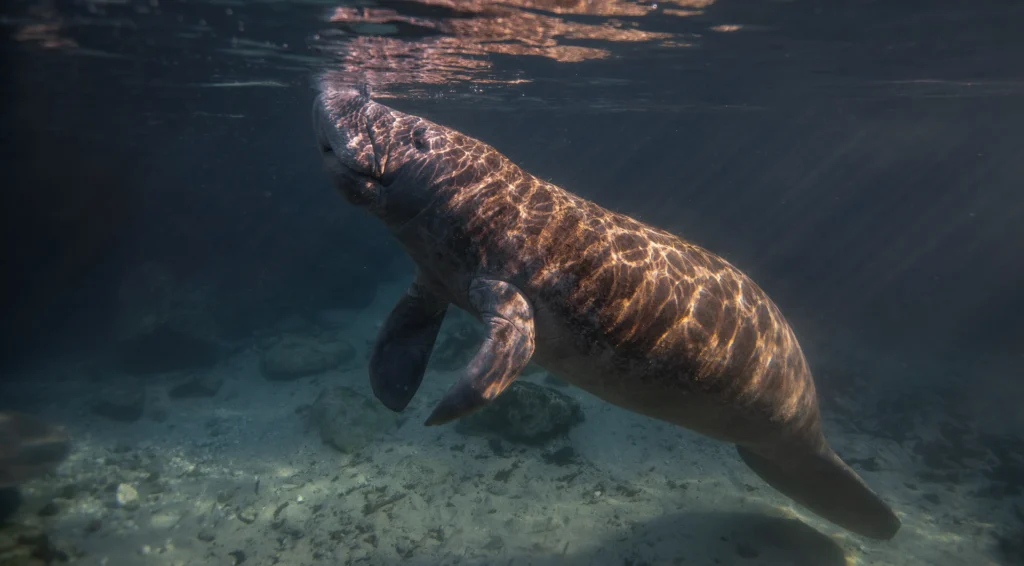
The Amazonian manatee is a mammal, so it cannot breathe underwater.
It must come to the surface to breathe air through its nostrils. Because its nostrils are located near the top of its snout, the animal can reach the surface without raising its entire head very far.
After taking a breath, it can return below the water to continue feeding or moving through its habitat.
This adaptation is useful in the Amazon, where manatees can spend long periods underwater while feeding on aquatic vegetation.
Is the Amazonian Manatee Active During the Day?
Amazonian manatees can be active during both the day and night.
Their behavior can change depending on water conditions, food availability, season, and other environmental factors.
They may spend much of their time slowly moving through the water while feeding. They can also rest in quiet areas.
Their slow movements are one reason they can be difficult to spot in the wild. They may surface briefly before disappearing underwater again.
Are Amazonian Manatees Social Animals?
Amazonian manatees can be social, although they are not always found in large groups.
Historical accounts describe larger gatherings of these animals, while modern sightings may involve individuals, mothers with calves, or smaller groups. Animal Diversity Web describes the species as gregarious.
Mother and calf relationships are particularly important.
A young calf remains closely associated with its mother after birth. This relationship allows the calf to receive milk, protection, and opportunities to learn about its environment.
How Do Amazonian Manatees Reproduce?
Amazonian manatees can breed throughout the year. Gestation lasts approximately one year, and females generally give birth to a single young at a time.
A single calf requires significant care from its mother.
The mother and calf form a strong bond, and the mother may carry the young calf on her back or keep it close to her body while swimming.
Because reproduction is relatively slow, losing adult animals can have a significant effect on local populations.
This is one reason hunting and other human-related threats are particularly concerning for the species.
What Eats the Amazonian Manatee?
Adult Amazonian manatees are large animals, so they do not have many natural predators.
However, young, injured, or vulnerable animals may face threats from large predators.
Sources have identified animals such as jaguars and crocodilians among potential predators of Amazonian manatees.
For adult manatees, however, human activity has historically been a much more important threat than natural predators.
Why Is the Amazonian Manatee Vulnerable?
The Amazonian manatee is classified as Vulnerable. The IUCN uses this category for species that meet criteria indicating a high risk of extinction in the wild.
Several factors can affect Amazonian manatee populations.
Hunting
Amazonian manatees have historically been hunted for meat and other products. Hunting can be particularly damaging because these animals reproduce relatively slowly.
Removing adult females can also reduce the number of calves produced in a population.
Habitat Changes
Amazon waterways are affected by human development, changes in land use, pollution, fishing activity, and other environmental pressures.
Changes to rivers and wetlands can reduce access to suitable feeding and resting areas.
Fishing Activity
Manatees can also be affected by human activity around rivers and fishing areas. Young animals are especially vulnerable to different hazards in heavily used waterways.
Seasonal Food Changes
The Amazon’s seasonal flooding cycle plays an important role in freshwater ecosystems. Changes in water conditions can affect the availability and distribution of aquatic vegetation.
Why Are Amazonian Manatees Important?
The Amazonian manatee is an important part of the freshwater ecosystem.
As a large herbivore, it consumes significant quantities of aquatic vegetation. Its feeding activity contributes to the movement of nutrients through the ecosystem.
More importantly, protecting the Amazonian manatee also means protecting the rivers, lakes, wetlands, and flooded forests that support many other species.
A healthy Amazonian freshwater habitat provides shelter and food for fish, reptiles, birds, amphibians, mammals, and countless other organisms.
How Can Amazonian Manatees Be Protected?
Protecting the species requires protecting both the animals and their habitat.
Important conservation measures include:
- Reducing illegal hunting
- Protecting important freshwater habitats
- Maintaining healthy rivers and wetlands
- Reducing harmful human activity around sensitive areas
- Improving awareness among local communities and visitors
- Supporting responsible wildlife tourism
- Monitoring wild populations
- Protecting mothers and calves
Conservation is especially important because the Amazonian manatee depends on a very large and connected freshwater environment.
Can You See an Amazonian Manatee in the Wild?
Seeing an Amazonian manatee in the wild can be difficult.
These animals are usually quiet and spend much of their time underwater. Their gray bodies can also blend into dark or muddy Amazonian water.
Wildlife travelers should never chase, touch, feed, or attempt to capture a manatee.
The best approach is to observe quietly from a safe distance and follow local wildlife-viewing rules.
Responsible tourism can help people learn about the species while reducing unnecessary disturbance.
Amazonian Manatee vs Other Manatees
There are three living species in the genus Trichechus:
Amazonian manatee: Lives primarily in freshwater habitats of the Amazon Basin.
West Indian manatee: Found in coastal and freshwater environments of the Americas, including areas around the Caribbean and Florida.
West African manatee: Found in freshwater and coastal environments in parts of West Africa.
The Amazonian manatee is particularly distinctive because of its strong association with the freshwater ecosystems of the Amazon Basin.
Interesting Facts About the Amazonian Manatee
Here are some quick facts about this fascinating species:
- Its scientific name is Trichechus inunguis.
- It is a mammal, not a fish.
- It lives in freshwater environments.
- Its range includes several Amazon Basin countries.
- It feeds mainly on aquatic vegetation.
- Its upper lips help it collect food.
- It can grow to around 2.8 meters.
- It can breed throughout the year.
- Females generally give birth to one calf.
- Pregnancy lasts approximately one year.
- Mothers form a close relationship with their calves.
- The species is classified as Vulnerable.
- Hunting and habitat changes are important conservation concerns.
- It is one of three living manatee species.
FAQs About Amazonian Manatee
Can Amazonian manatees live in saltwater?
No. Amazonian manatees are adapted to freshwater and are primarily found in rivers, lakes, lagoons, and flooded areas of the Amazon Basin.
How long can an Amazonian manatee stay underwater?
They can remain underwater for several minutes before returning to the surface to breathe. The exact time varies depending on their activity and surroundings.
Do Amazonian manatees have teeth?
Yes. They have specialized teeth that help them process their plant-based diet. Their teeth are gradually replaced as they wear down.
Do Amazonian manatees migrate?
Yes. They can move between different parts of their habitat as water levels and food availability change, especially during seasonal flooding and dry periods.
How fast can an Amazonian manatee swim?
Amazonian manatees usually move slowly, but they can swim faster for short periods when traveling or responding to danger.
Do Amazonian manatees make sounds?
Yes. Manatees can produce sounds to communicate, particularly between mothers and calves. These sounds can help them maintain contact underwater.
How long do Amazonian manatees live?
Their exact lifespan in the wild is not well established. However, individuals can live for many years under suitable conditions.
Do Amazonian manatees sleep?
Yes. They need periods of rest and can rest underwater or remain relatively still near the surface.
Are Amazonian manatees dangerous to humans?
No, they are generally peaceful herbivores and are not considered dangerous to people. However, wild manatees should always be observed from a safe distance.
What is the difference between an Amazonian manatee and a dugong?
The Amazonian manatee is a freshwater species found in the Amazon Basin, while the dugong is a different sirenian species that mainly lives in coastal marine waters of the Indo-Pacific region.
Conclusion
The Amazonian manatee is a unique part of the Amazon rainforest ecosystem. Although it may look slow and simple at first glance, it is highly adapted to life in freshwater rivers, lakes, lagoons, and flooded forests.
Its plant-based diet, specialized lips, swimming abilities, and close relationship between mothers and calves make it an interesting species to learn about.
The biggest challenge for the Amazonian manatee is not simply finding food or avoiding predators. Human activity has created some of its most serious threats. Protecting the species means protecting the freshwater habitats on which it depends.
For travelers exploring the Amazon, learning about animals such as the Amazonian manatee can make a rainforest experience much more meaningful. The species is a reminder that the Amazon is not only a forest filled with trees and birds. Its rivers and wetlands support an equally fascinating world beneath the surface.