Giant otters are large, social freshwater mammals native to South America. Their scientific name is Pteronura brasiliensis, and they belong to the weasel family, Mustelidae. They are the largest otter species in the world and are particularly well adapted to life in the rivers, lakes, and wetlands of the Amazon Basin.
These animals are sometimes called river wolves because they are skilled predators that hunt fish and other aquatic animals. Unlike many otter species that live alone or in smaller groups, giant otters usually live in family groups. They communicate through different sounds, body movements, and scent markings.
The Amazon rainforest provides an ideal environment for giant otters. Its extensive river systems, floodplain forests, oxbow lakes, and wetlands offer food, shelter, and places to raise their young.
Giant otters are important to the Amazon ecosystem because they help regulate fish populations and indicate the health of freshwater habitats. However, their survival is threatened by several environmental pressures, making conservation efforts essential.
Key Takeaways
- Giant otters are the largest otter species in the world.
- Their scientific name is Pteronura brasiliensis.
- They are native to South America, including the Amazon Basin.
- They live in rivers, lakes, wetlands, and flooded forests.
- Fish make up most of their diet, although they also eat other aquatic animals.
- They live in close family groups and cooperate while hunting and raising pups.
- Giant otters communicate through whistles, growls, snorts, and other vocalizations.
- They are classified as Endangered on the IUCN Red List.
- Habitat destruction, pollution, hunting, and human disturbance threaten their survival.
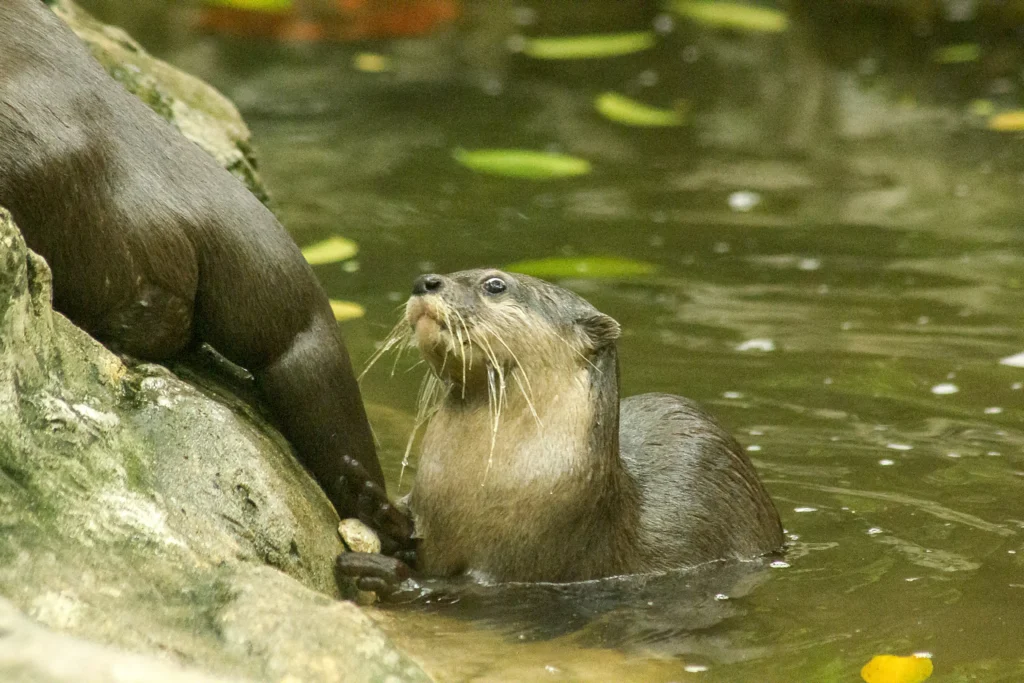
1. Where Do Giant Otters Live?
Giant otters are found in freshwater habitats across parts of South America. Their natural range includes the Amazon Basin, the Orinoco Basin, and the Pantanal wetlands.
The Amazon rainforest is one of their most important habitats because it contains an extensive network of rivers, streams, lakes, and seasonal floodplains.
Countries where giant otters occur include:
- Brazil
- Peru
- Ecuador
- Colombia
- Bolivia
- Venezuela
- Guyana
- Suriname
- French Guiana
- Paraguay
Their distribution is not continuous across every part of these countries. Local populations depend on suitable waterways, sufficient prey, and places where they can rest and establish dens.
What Type of Habitat Do Giant Otters Prefer?
Giant otters generally prefer freshwater environments with plenty of fish and relatively undisturbed riverbanks.
Their preferred habitats include:
Rivers: Rivers provide access to fish and allow family groups to travel between feeding and resting areas.
Lakes and oxbow lakes: These water bodies can provide productive fishing grounds and quieter areas for resting.
Flooded forests: During the rainy season, water spreads into forested areas, creating additional feeding opportunities.
Wetlands: Marshes and other wetland environments support fish and other aquatic prey.
Riverbanks: Giant otters use riverbanks to rest, groom, communicate, and establish communal latrines.
Healthy vegetation along riverbanks is especially important. It provides shelter, helps stabilize the soil, and offers suitable locations for dens and resting sites.
2. What Do Giant Otters Look Like?
Giant otters have long, muscular bodies, thick brown fur, webbed feet, and powerful tails. Their bodies are designed for swimming and hunting in freshwater environments.
Adult giant otters can reach approximately 1.5 to 1.8 metres in total length, including the tail. Some individuals may be longer. They typically weigh around 22 to 32 kilograms, although size varies between individuals and populations.
Several physical features make them easy to recognize.
Distinctive White or Cream Throat Markings
One of the most recognizable features of a giant otter is the pale marking on its throat and upper chest.
These markings are different for each individual. Researchers can use them to identify and monitor individual otters in the wild.
Webbed Feet
Giant otters have webbed feet that help them swim efficiently. Their strong limbs allow them to move quickly through the water while searching for prey.
Long, Muscular Tail
Their tails help with steering and balance while swimming. Combined with their streamlined bodies, this makes them effective underwater hunters.
Dense Fur
Giant otters have dense fur that helps protect them from the water. Their coats provide insulation and help maintain body temperature.
Unlike marine mammals, giant otters do not have a thick layer of blubber for insulation. Their fur plays an important role in keeping them warm.
Sensitive Whiskers
Their whiskers help them detect movement and vibrations in the water. This can be useful when locating fish in areas where visibility is limited.
3. What Do Giant Otters Eat?
Giant otters are carnivorous animals, and fish make up most of their diet.
They are active hunters that search for prey in rivers, lakes, and flooded forest areas. Their diet can change depending on the location, season, and availability of food.
Common prey includes:
- Catfish
- Cichlids
- Characins
- Piranhas
- Other freshwater fish
- Crustaceans
- Occasionally small aquatic reptiles and other available prey
Fish are particularly important because giant otters are adapted to catching and eating them.
How Do Giant Otters Hunt?
Giant otters usually hunt during the day. They can search for food individually or cooperate with members of their family group.
When hunting, they use their excellent swimming abilities to pursue fish underwater. Their sensitive whiskers help them detect movement, while their strong jaws and sharp teeth allow them to capture and eat prey.
Family groups may work together to catch fish, especially when pursuing prey in suitable shallow-water areas.
Once a fish is caught, the otter may bring it to the surface or a nearby resting area before eating it.
Unlike some predators that consume prey in large pieces, giant otters often hold fish with their front paws and eat them headfirst.
Do Giant Otters Eat Piranhas?
Yes. Giant otters can eat piranhas, along with several other types of freshwater fish.
Although piranhas have a reputation for being dangerous, they are part of the natural food web in Amazonian rivers. Giant otters are capable predators and can catch different fish species depending on availability.
Their diet is not limited to piranhas. Catfish, cichlids, and other fish are also important food sources.
4. Why Are Giant Otters Called River Wolves?
Giant otters are sometimes called river wolves because of their social behavior, coordinated hunting, and position as predators in freshwater ecosystems.
They are not wolves, but they share certain social characteristics with other group-living predators.
Giant otters usually live in family groups consisting of a breeding pair and their offspring from different years. Family members often cooperate when hunting, protecting their territory, and raising pups.
Their group behavior makes them particularly interesting to wildlife researchers.
They can also be very vocal. A group of giant otters may produce whistles, growls, snorts, and other sounds while moving through the water or interacting on riverbanks.
These behaviors contribute to their reputation as highly social river predators.
5. How Do Giant Otters Live in Family Groups?
Giant otters are highly social animals. They usually live in family groups rather than spending most of their lives alone.
A typical group includes a dominant breeding pair and their offspring. Older offspring may remain with the family and help care for younger pups.
Family members cooperate in several ways:
- Hunting for fish.
- Protecting the group from threats.
- Defending their territory.
- Caring for young pups.
- Communicating during travel and feeding.
- Maintaining shared resting and denning areas.
This social structure gives young otters an opportunity to learn important survival skills from older members of the group.
How Do Giant Otters Communicate?
Communication is an essential part of giant otter life.
They use a variety of vocalizations to coordinate group activities and respond to possible threats.
Common sounds include:
Whistles: Used during social interactions and when members of the group need to maintain contact.
Growls: May be used during aggressive or defensive encounters.
Snorts: Can occur during alert or warning situations.
Screeches and other calls: Help express excitement, alarm, or other social responses.
They also use scent marking to communicate information about their territory.
6. How Do Giant Otters Reproduce?
Giant otters generally form long-term breeding partnerships and raise their pups as a family.
Breeding can occur at different times of the year depending on local environmental conditions. In some areas, births are more common during periods when water levels and food availability are favorable.
After mating, the female usually gives birth to a small litter in a protected den near the river.
A litter commonly contains one to five pups, although litter size can vary.
How Do Giant Otters Care for Their Pups?
Newborn giant otter pups are small, helpless, and dependent on their parents.
They are born in dens, often located along riverbanks. These dens provide shelter and protection during the earliest stages of life.
Both parents play important roles in raising the young. Older offspring may also help protect and care for their younger siblings.
As the pups grow, they begin exploring the area around the den and gradually learn how to swim and hunt.
They depend on their family group to develop the skills needed to survive in the wild.
This extended period of parental and family care is important because young giant otters must learn to navigate waterways, recognize potential threats, and capture prey.
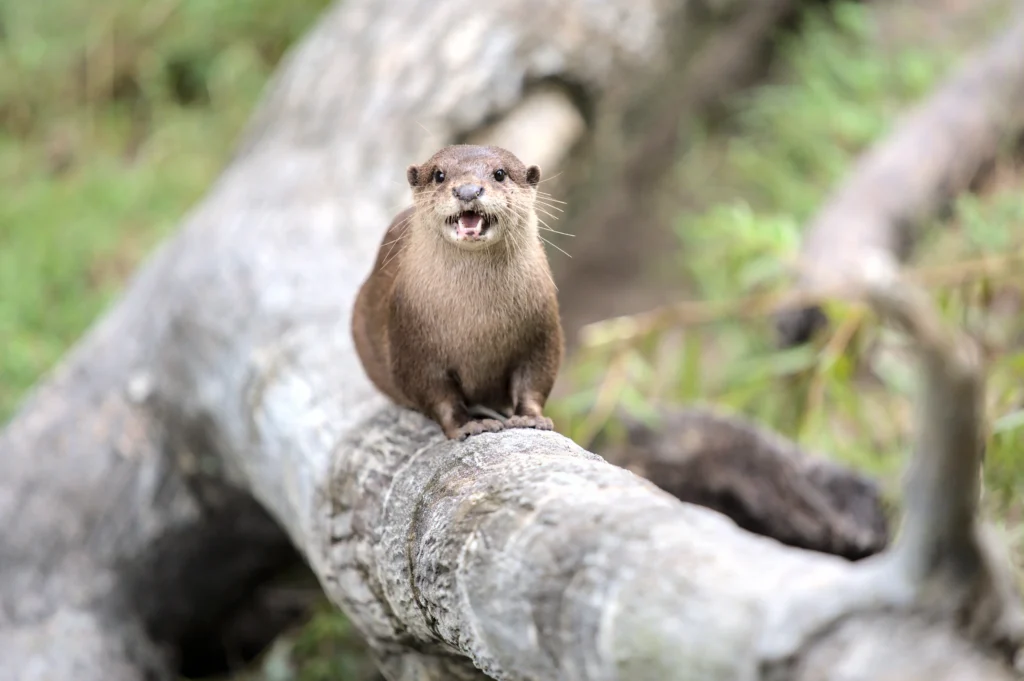
7. Are Giant Otters Dangerous to Humans?
Giant otters are wild predators, but they generally avoid direct contact with humans.
They are not naturally aggressive toward people. However, they can become defensive if they feel threatened, particularly when protecting their pups or territory.
A giant otter has strong jaws and sharp teeth. If approached too closely, cornered, or disturbed, it may bite.
Visitors should never try to touch, feed, chase, or approach these animals.
When observing giant otters in the Amazon, follow these precautions:
- Maintain a safe distance.
- Avoid approaching dens or young pups.
- Never attempt to feed them.
- Do not block their route to the water.
- Keep noise levels low.
- Follow the instructions of local wildlife guides.
Responsible observation helps protect both visitors and animals.
8. What Is the Difference Between Giant Otters and Other Otter Species?
There are several otter species around the world, but the giant otter is the largest.
Other species include the North American river otter, Eurasian otter, smooth-coated otter, and neotropical otter.
Here are some important differences.
| Feature | Giant Otter | Neotropical Otter | North American River Otter |
| Scientific name | Pteronura brasiliensis | Lontra longicaudis | Lontra canadensis |
| Native range | South America | Central and South America | North America |
| Size | Largest otter species | Smaller | Smaller |
| Social behavior | Usually lives in family groups | Often more solitary | Often solitary or in small groups |
| Habitat | Rivers, lakes, and wetlands | Rivers, streams, and wetlands | Rivers, lakes, and coastal areas |
| Main diet | Mainly fish | Fish and other aquatic prey | Fish and other aquatic prey |
The giant otter stands out because of its size, social behavior, and distinctive throat markings.
9. Why Are Giant Otters Endangered?
Giant otters are classified as Endangered on the IUCN Red List.
Their population has declined significantly in parts of their historical range, and several threats continue to affect their survival.
Habitat Destruction
Deforestation, mining, agriculture, and infrastructure development can damage freshwater habitats.
When riverbanks are cleared, giant otters lose suitable places to rest, raise pups, and establish dens.
Changes to rivers and wetlands can also affect fish populations, reducing the availability of food.
Water Pollution
Pollution is a serious concern in parts of the Amazon Basin.
Mining activities can introduce mercury and other contaminants into rivers. Agricultural runoff, sewage, and other pollutants can also affect freshwater ecosystems.
Because giant otters depend on fish, contamination of aquatic food chains can expose them to harmful substances.
Illegal Hunting
Giant otters were historically hunted for their valuable fur.
Commercial hunting caused severe population declines during the twentieth century. Although legal protections have been introduced in many areas, illegal killing and conflicts with people remain concerns.
Fishing Conflicts
Giant otters and humans sometimes depend on the same fish resources.
In areas where fishing is important for local livelihoods, otters may be viewed as competitors. This can lead to conflict, especially when fish stocks are already under pressure.
Accidental entanglement in fishing equipment can also injure or kill aquatic mammals.
Human Disturbance
Tourism, boat traffic, and development near riverbanks can disturb giant otters.
Repeated disturbance around resting areas and dens may cause animals to abandon otherwise suitable habitat.
Protecting quiet riverbank areas is particularly important during the breeding season.
10. What Is Being Done to Protect Giant Otters?
Several conservation organizations, researchers, governments, and local communities are working to protect giant otters and their freshwater habitats.
Conservation measures focus on reducing threats while maintaining healthy river ecosystems.
Important activities include:
- Protecting rivers, wetlands, and floodplain forests.
- Monitoring known giant otter populations.
- Reducing illegal hunting and wildlife trade.
- Addressing water pollution.
- Promoting sustainable fishing practices.
- Supporting environmental education.
- Encouraging responsible wildlife tourism.
- Working with local communities to reduce human-wildlife conflict.
Protected areas in the Amazon Basin provide important habitats for giant otters. However, conservation cannot rely only on protected boundaries. Healthy waterways and connected habitats outside protected areas are also necessary.
Local communities play an important role because they often have extensive knowledge of rivers, wildlife, and seasonal environmental changes.
11. Why Are Giant Otters Important to the Amazon Ecosystem?
Giant otters are important predators in Amazonian freshwater ecosystems.
By feeding mainly on fish, they participate in the natural regulation of aquatic food webs. Their hunting activities influence the relationships between fish populations and other organisms.
They also serve as indicators of freshwater ecosystem health.
A healthy giant otter population generally requires:
- Clean freshwater.
- Sufficient fish populations.
- Suitable riverbank vegetation.
- Safe denning areas.
- Connected waterways.
- Limited human disturbance.
When giant otter populations disappear from an area, it can indicate that important parts of the freshwater ecosystem have been damaged.
Protecting giant otters therefore helps conserve other aquatic animals, riverbank habitats, and the wider biodiversity of the Amazon rainforest.
12. Where Can You See Giant Otters in the Amazon?
Wild giant otters can be observed in several protected areas and nature reserves across South America.
Some well-known places include:
Yasuni National Park, Ecuador
Yasuni National Park is one of Ecuador’s most important protected rainforest areas. Its rivers, lakes, and flooded forests provide habitats for many Amazonian species.
Giant otters are among the wildlife that researchers and visitors may encounter in suitable areas.
Cuyabeno Wildlife Reserve, Ecuador
The Cuyabeno region contains an extensive network of rivers, lagoons, and flooded forests.
Its aquatic habitats support diverse wildlife, including giant otters. Visitors exploring the reserve with experienced local guides may have opportunities to observe them.
Manu National Park, Peru
Manu National Park protects a wide range of Amazonian habitats, including rivers and oxbow lakes.
Its freshwater environments provide suitable conditions for giant otters and many other aquatic species.
Pantanal, Brazil
Although the Pantanal is not part of the Amazon rainforest, it is another important region for giant otter conservation.
Its wetlands and waterways support fish populations and provide suitable habitat for these animals.
Wildlife sightings depend on the season, water levels, and the movements of individual groups. Seeing giant otters in the wild is never guaranteed.
13. How Can Tourists Observe Giant Otters Responsibly?
Responsible tourism can support wildlife conservation when visitors and tour operators follow appropriate guidelines.
If you are exploring the Amazon rainforest, consider these practices:
- Choose licensed and responsible local guides.
- Follow protected-area regulations.
- Keep a respectful distance from wildlife.
- Avoid loud noises near resting or breeding areas.
- Never feed wild animals.
- Do not attempt to touch or chase giant otters.
- Avoid disturbing riverbank vegetation or dens.
- Choose operators that support local conservation and communities.
The best wildlife experiences allow animals to continue their natural behavior without interference.
FAQs About Giant Otters of the Amazon
1. What is the scientific name of the giant otter?
The scientific name of the giant otter is Pteronura brasiliensis. It belongs to the Mustelidae family, which also includes weasels, badgers, and other otter species.
2. Are giant otters found in the Amazon rainforest?
Yes. Giant otters live in the Amazon Basin, including parts of Brazil, Peru, Ecuador, Colombia, and Bolivia. They inhabit rivers, lakes, wetlands, and flooded forests.
3. How big are giant otters?
Giant otters can reach approximately 1.5 to 1.8 metres in total length, including the tail. Adults commonly weigh around 22 to 32 kilograms, although their size varies.
4. What do giant otters eat?
Fish make up most of their diet. They also eat other aquatic animals, including crustaceans and occasionally small reptiles, depending on what is available.
5. Why are giant otters called river wolves?
They are called river wolves because they are skilled predators that often hunt cooperatively in family groups. Their social behavior and hunting abilities resemble those of some group-living land predators.
6. Are giant otters dangerous to humans?
Giant otters generally avoid humans, but they can defend themselves if threatened. They have strong jaws and sharp teeth, so visitors should never approach, touch, or feed them.
7. Are giant otters endangered?
Yes. Giant otters are classified as Endangered on the IUCN Red List. Habitat destruction, pollution, hunting, and human disturbance are among the main threats to their survival.
8. How many giant otters live together?
A family group commonly contains around two to eight individuals, although group size varies. Groups generally include a breeding pair and their offspring.
9. Where is the best place to see giant otters in Ecuador?
Yasuni National Park and Cuyabeno Wildlife Reserve are important Amazonian areas where giant otters may be observed. Sightings depend on local conditions and wildlife movements.
10. How long do giant otters live?
Giant otters can live for around 10 to 12 years in the wild, although lifespan varies with environmental conditions, food availability, disease, and other factors.
Conclusion
Giant otters are among the most remarkable mammals of the Amazon rainforest. Their large bodies, powerful swimming abilities, family-based social structure, and coordinated hunting make them unique freshwater predators.
They play an important role in maintaining healthy aquatic ecosystems, but their survival depends on clean rivers, abundant fish, protected riverbanks, and reduced human disturbance.
Deforestation, pollution, hunting, and fishing conflicts continue to threaten their populations. Protecting giant otters requires long-term conservation efforts involving governments, researchers, local communities, and responsible tourism operators.
For travelers visiting the Ecuadorian Amazon, places such as Yasuni National Park and Cuyabeno Wildlife Reserve offer opportunities to explore habitats where giant otters may be found. Experiences with responsible local guides can help visitors appreciate these animals while supporting the protection of the rainforest.