PROLOGUE

Welcome to the Jungle

WELCOME TO THE JUNGLE

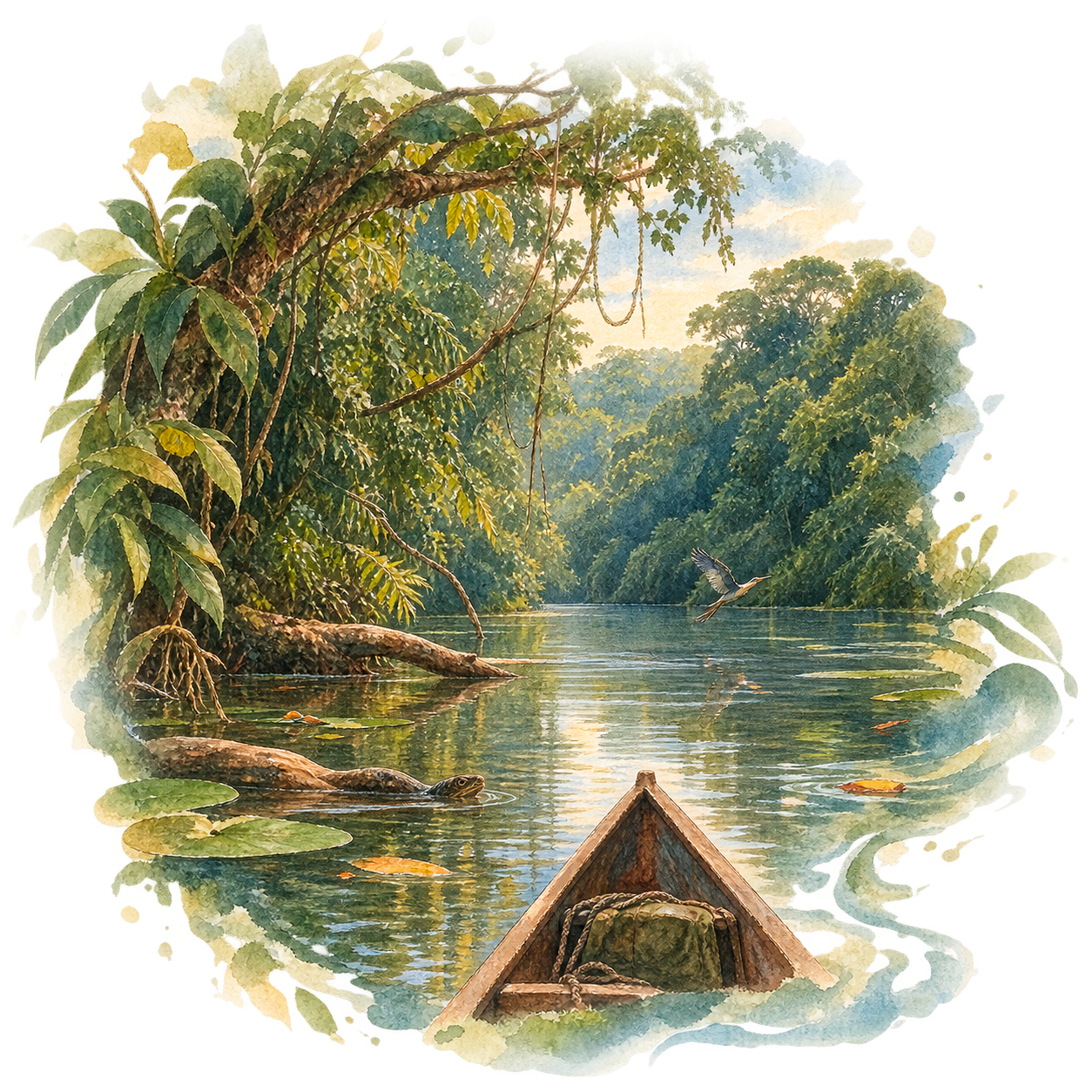
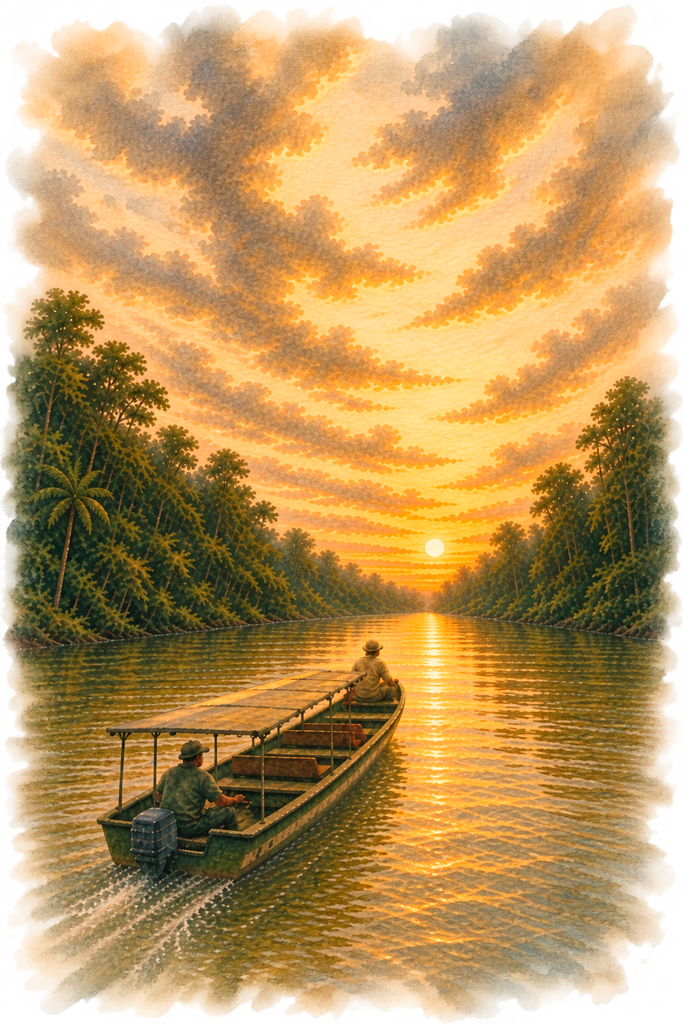
The Napo River, one of the great tributaries of the Amazon, winds for more than a thousand kilometres before disappearing into Peru. Along one of its Ecuadorian stretches I met Guillermo, seated at the bow of a long wooden canoe, as if reading a book he knew by heart. He wore dark glasses and a scarf covering the rest of his face.

The canoe was helmed by two men: one at the stern, master of the outboard motor; and Guillermo at the bow, master of the river. His job was not to speak, but to look. He studied every shadow on the water, the patterns in the current, the way the river seemed to breathe. With a simple gesture he dictated our course: if he raised his right hand, the canoe veered right; if he lifted the left, we drifted to the other bank; if he closed his fist, we stopped; if he drew an “S” in the air, the bow obeyed as though the river were a trained animal.
By day, Guillermo navigates with confidence, yet his eyes truly come alive when he speaks of the night. He prefers to travel guided by the stars and their tremulous reflections on the water. In the deep darkness, he insists no one turn on their phone; he prefers a journey without lights that aren’t born in the sky. When the rain arrives and the heavy drops strike the river, he smiles: “that’s when you can see best,” he says, for the pattering on the surface reveals depth and hidden paths.

That day, however, the sun fell gently and the canoe moved with steady purpose. The speed was perfect: fast enough to feel the wind on my face, slow enough to savour the journey. The air was perfectly balanced — neither cold nor hot. The smell of damp wood mingled with the faint smoke of the engine, and the sound of the water slapping against the hull was hypnotic.

Somewhere along that stretch I realised the river was not only carrying me towards a physical destination. It was opening the door to a deeper territory: a world of memories, spirits, and stories that inhabit the forest. And as the wind struck my face, I sensed this was no ordinary crossing. It was the jungle itself, offering me its welcome.

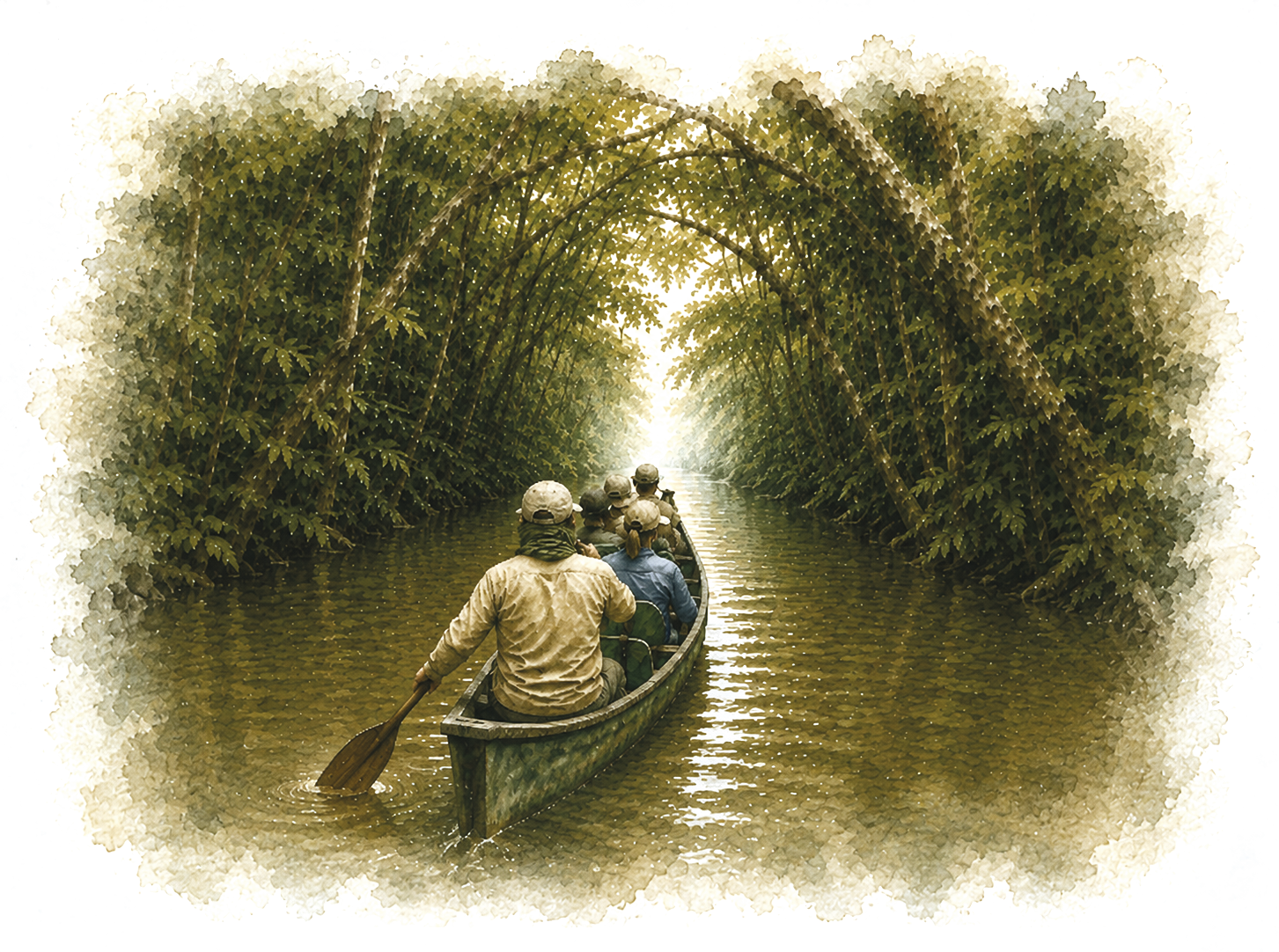
The journey required an unexpected change of canoe. The roar of the motor was replaced with the soft rhythm of water meeting a worn, wooden paddle. Guillermo now rowed slowly, alert to any curious creature that might cross our path. On either side, the trees arched overhead, forming a natural tunnel, as if the forest wished to fold itself around us to make our entrance even more magical.

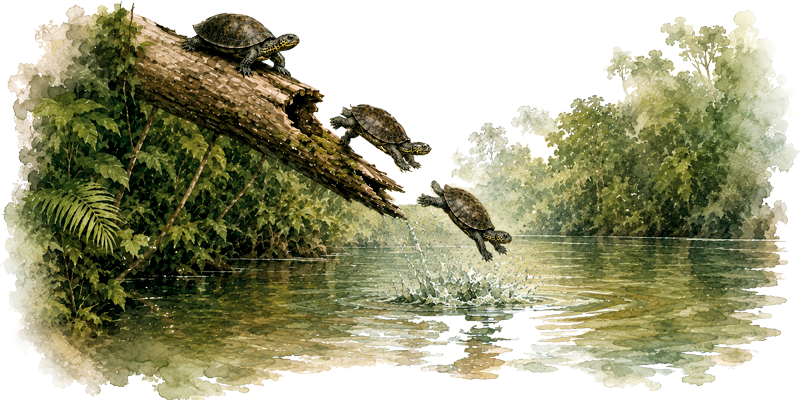
As we advanced, the silence grew denser, creating a sensation in my ears I had never felt before, heightening my awareness of the howler monkeys’ roar and the birdsong that continued, unperturbed by my presence. The only newcomer here was me. The creek widened and released us into the middle of a lagoon. Along its banks, fallen logs bobbed quietly, and small grey shapes slipped into the water as we approached. It didn’t take long to realise these were, in fact, furtive turtles.

Slowly, amidst the mosaic of sounds and shimmering reflections, the lodge appeared — named after the very jungle that envelops it — standing in the middle of, quite literally, nowhere.

The adventure had begun.