CHAPTER SEVEN

Bolívar and his wife Isabel live in a wood-coloured house, the shade of earth, in one of the communities near the lodge.

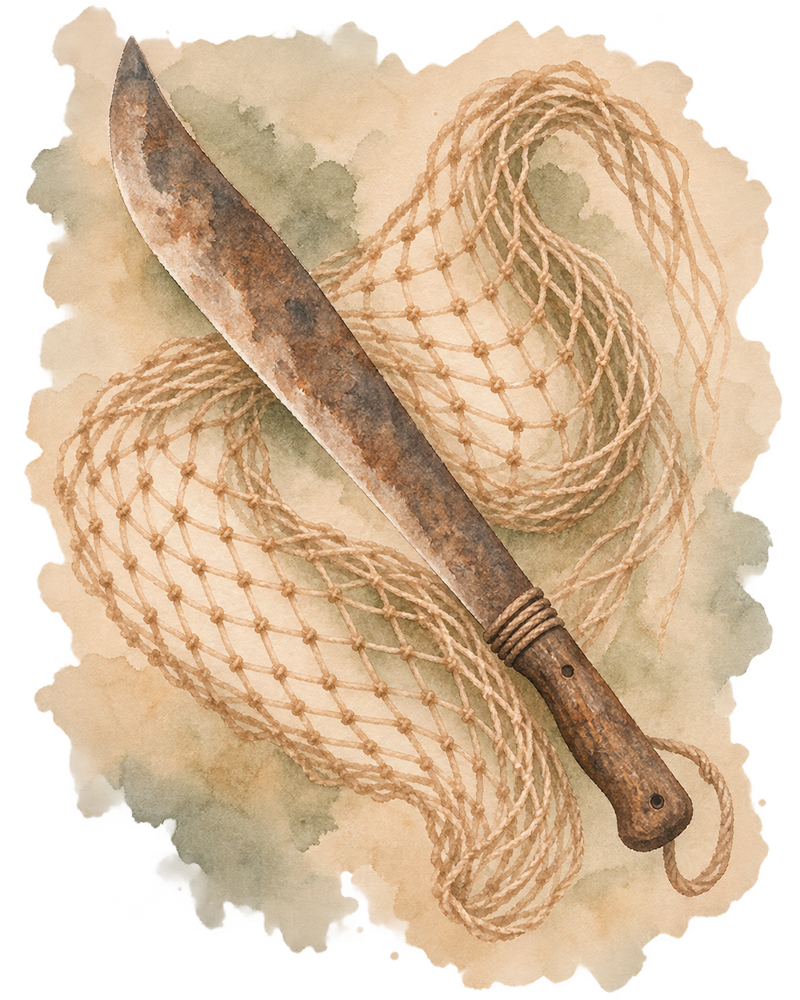
Their still-strong hands hold the memory of the days when they helped to raise the lodge’s first structures, when a single machete was enough to open the trails.

Back when the only medicine came from the forest and there were healers instead of doctors; when fishing nets were woven from chambira fibre because there was no nylon thread for “stringing” the net —they would gather the palm, dry it in the sun, and spend a month “spinning” it— , weddings were lived in a different way.

Many years ago, when times were different, Don Bolívar asked for the hand of Doña Isabel Yumbo. Isabel’s father demanded that he fulfil all three ceremonies: the civil, the religious, and the cultural.
Without knowing quite why, he insisted only Bolívar — out of all his sons-in-law — meet all these conditions. Bolívar prepared himself to do so, because the bride’s father must always be obeyed.

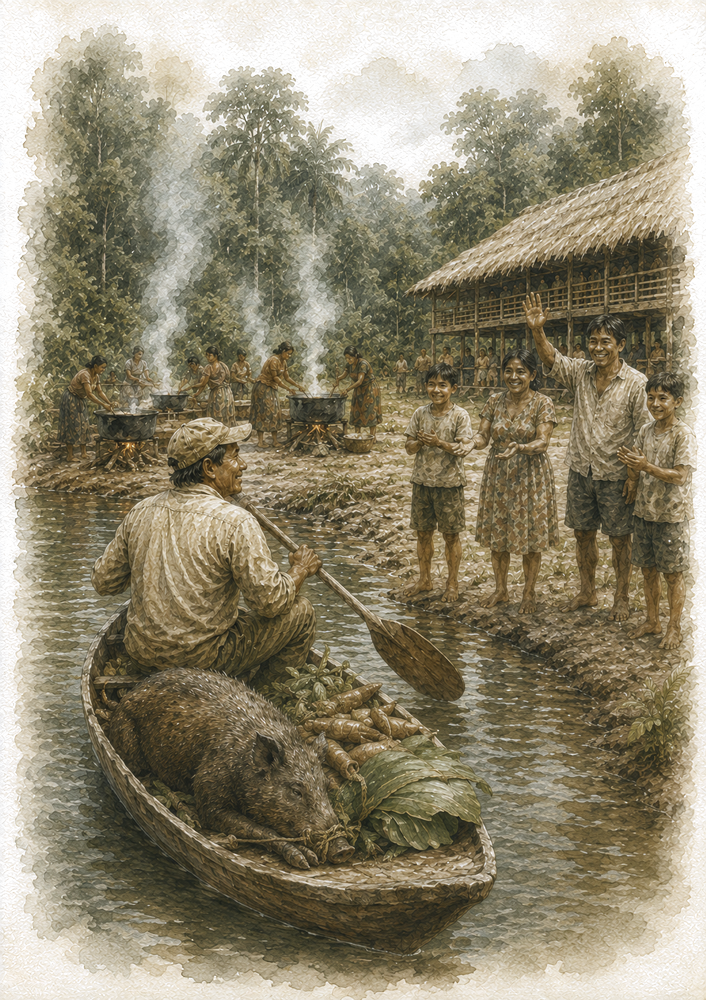
Tradition dictated that, after the civil marriage, the groom had to go into the forest and hunt. He was given a week to bring back monkey, wild pig and wild turkey for more than two hundred people, as the entire community was invited.

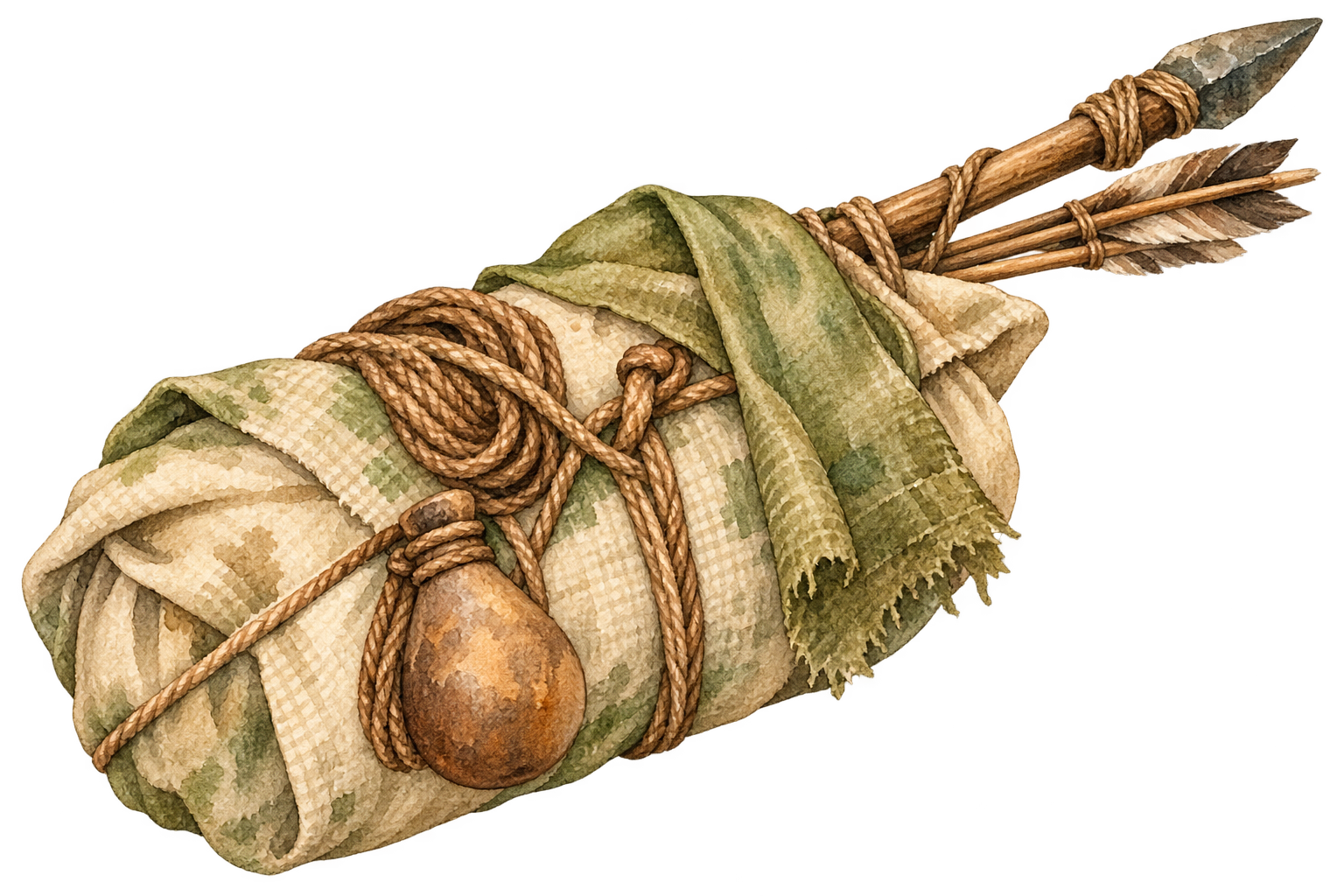
Bolívar’s father helped him by giving him the supplies needed for the hunt.

The community also helped. The dynamic was simple and full of gratitude towards the sacha, the forest: to give thanks for providing the food needed for the wedding and for life. Bolívar oversaw the natural process of this tradition and had to have the food ready for the day of the celebration.

As the party would be on a Saturday, Bolívar had to return a couple of days earlier so the cooks could prepare the feast. Meanwhile, the guests arrived, hungry and thirsty.

In those days, beer did not exist for them, so they celebrated with puro and traditional chicha, the ancestral drink made from cassava.

Preparing chicha was a fully communal process and, in many cases, reserved for the women of the family.

First the cassava was boiled until soft, then it was mashed. The resulting pulp was mixed with the enzymes of the saliva of the woman preparing it. It was then left to ferment in warm water, covered with large plantain leaves. As the days went by, the flavour changed, and by the day of the celebration, the drink was ready to be served in pilche gourds.

A woman continuously filled the pilches so that guests would drink the chicha in a single gulp, with no optionto pass.

The guests did not bring food, but they did bring gifts: board games, axes, kitchen utensils, sheets of corrugated zinc, cinder blocks, iron, and materials to build the little house, which the groom himself was expected to construct.

Cultural weddings in the community tend to be different today. No groom is expected to hunt for days. The chicha and the monumental celebrations, however, remain — because love deserves to be celebrated on a grand scale.