CHAPTER THREE

A chicken broth is a highly coveted dish in the forest. The bird is boiled with herbs and spices, and little by little the concoction becomes the delicacy many say cures the flu, while others recommend it for a hangover. But for Don Miguel and Nélida, it was simply a craving.

Nélida — a waitress at the lodge — but also famed chicken broth chef, offered to prepare a little broth for Don Miguel — the lodge’s hotel manager — and the rest of the team. She had spent three days looking for the perfect plump chicken. She trussed it and carried it alive straight to the staff kitchen.

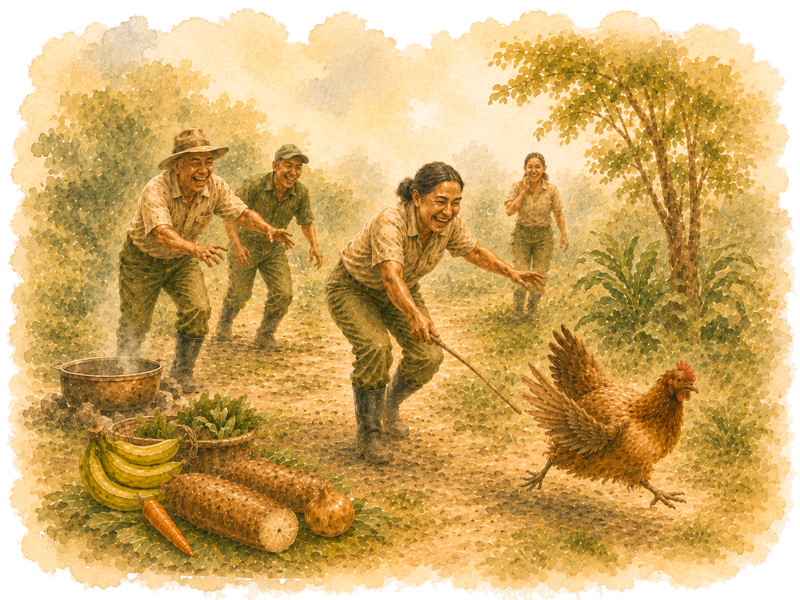
While the water boiled for plucking, she began chopping the ingredients: green plantain, cassava, onion, and carrot. But just as she was about to start, the chicken escaped.
They searched through the swamp, along the banks, through the thickets and undergrowth. They searched everywhere, until finally, a clucking sound led them to a corner of the forest where it was hiding. They caught it with a stick, laughing through their exhaustion and disbelief.

Nélida, ever the expert, made sure it wouldn’t escape again. She plucked it, cooked it, and at last they all enjoyed the long-awaited broth, between laughter and relief.

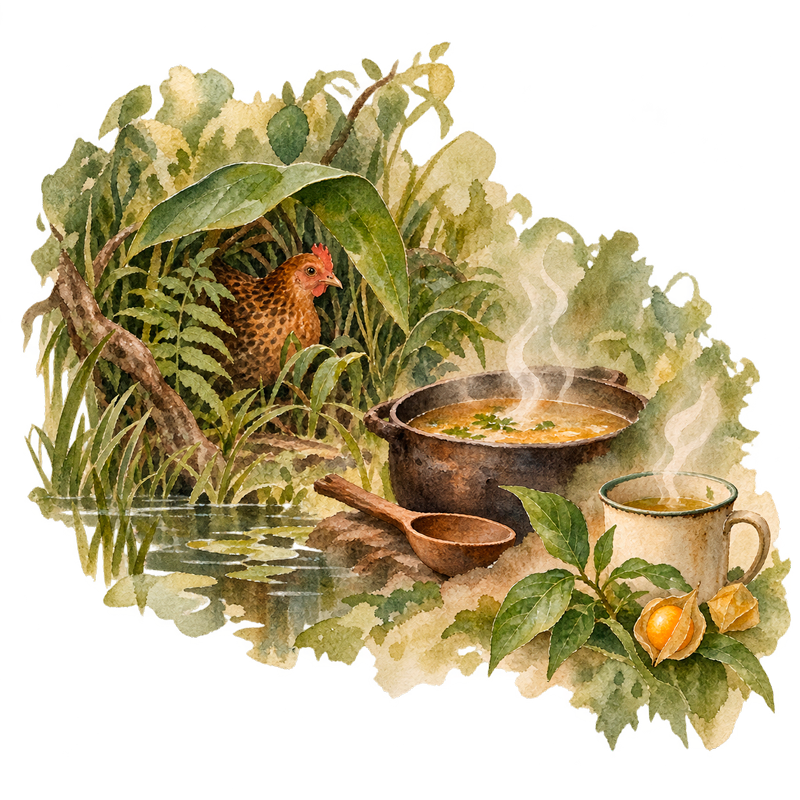
Afterwards, Nélida prepared her tea made from the uvilla fruit’s leaves — which she swears helps with triglycerides — while Miguel returned to his office, convinced once more that his team’s empathy and good nature are the lodge’s true essence.

The human warmth of the lodge staff — waiters, housekeepers, guides — is unique. It is, according to Miguel, the lodge’s true “high-end” element.

Miguel arrived in the forest almost ten years ago, after receiving the blessing of an Achuar shaman in his previous job. During an Atem ceremony — the sacred moment when ayahuasca is drunk and the shaman interprets the visions — Sumpa, the shaman, told him:

“If the forest hasn’t given you any advice, it’s because you’re doing the right thing. ”

Since then, Miguel has lived according to the forest’s logic. For the native peoples, there is no distant future, only the near one; even their language reflects this: they do not conjugate time with precise dates, but with the seasons of life — the time of the turtles, of the plump monkeys, of the chontapalm’s grubs…

That wisdom led him to live in the present at the lodge, to turn challenges into opportunities.

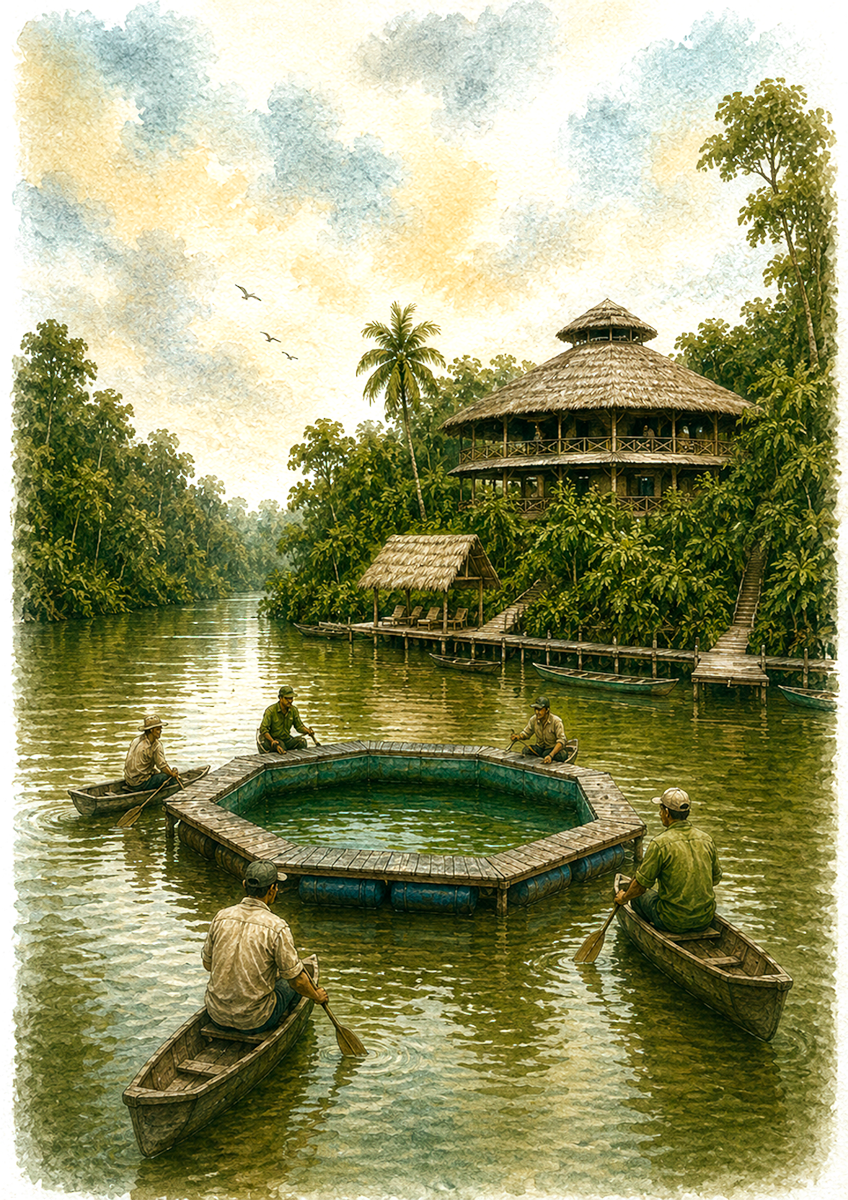
Among his boldest ideas was building a safe swimming pool in the middle of the lagoon, so guests could swim without fear of the caimans. The structure, shaped like an inverted octagon, was assembled outside the lodge and then transported by paddle, floating on twenty-five-gallon tanks. Two months, six people, and a dream fulfilled: swimming above a world of anacondas.

But his attention was also set on something more vital: replacing the old wooden water tower with a metal one capable of providing clean, iron-free water.

Canoes loaded with materials, days of manual hauling, pulleys, metal cables, and an incredible human effort — to which the lodge owes its crystal-clear water… Their achievement only made possible by the lodge’s philosophy: working in harmony with nature.

Miguel shares his love for the lodge with his friend Marcelino, with whom he has built every improvement, from the pool to the new spa platform in the lagoon, and who he says possesses the lodge’s mother’s heart.

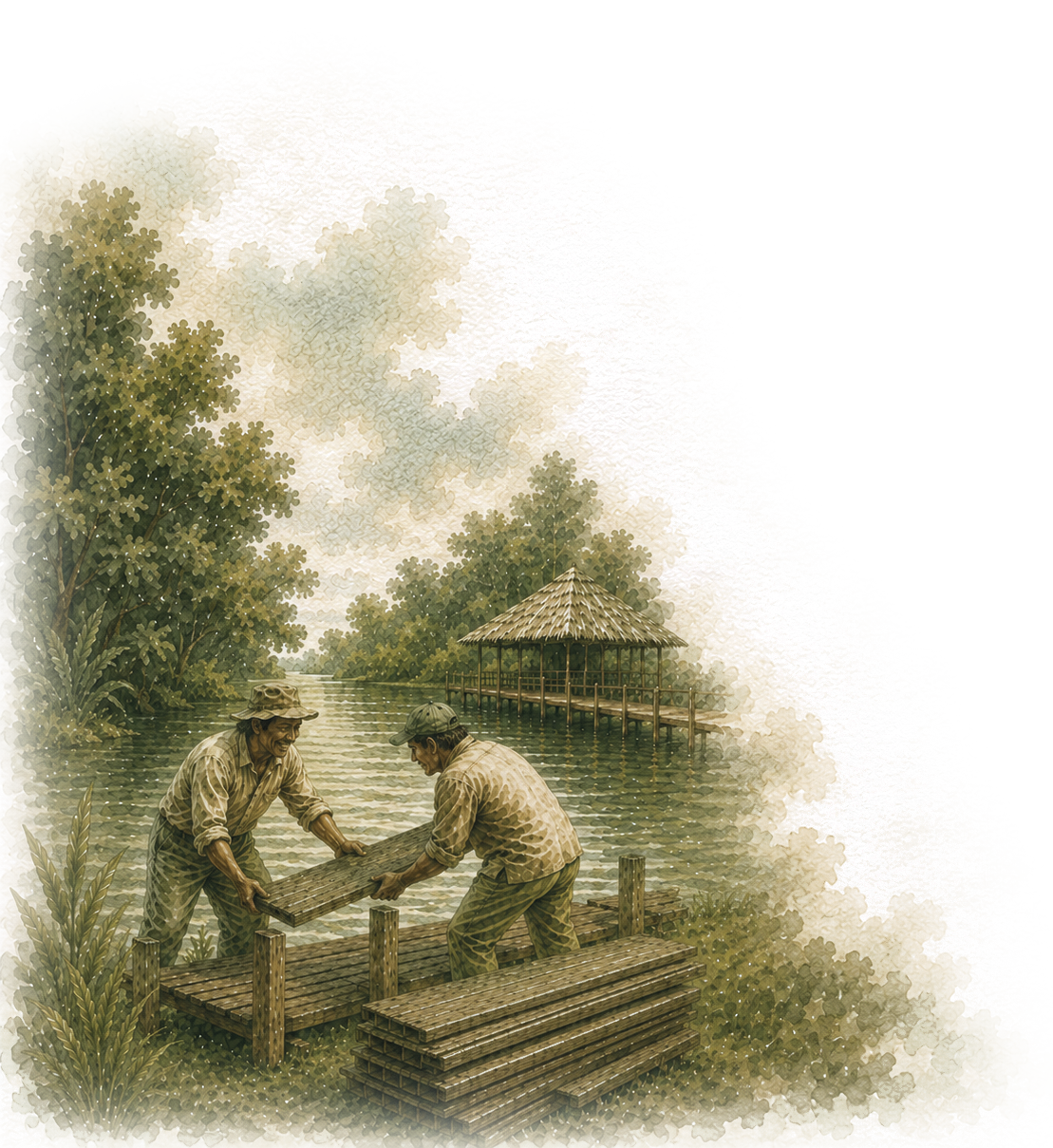
To build the platform, seven thousand plastic-wood planks needed to be assembled on site, shipped in twenty at a time. A slow, patient, almost meditative job. But seeing the older guests enjoying the spa makes it all worthwhile.

Just like Nélida’s broth, team effort and human warmth always end up making everything taste that much better.