CHAPTER FIVE

His name is Bernardo, but they call him José because of a mix-up when he his birth was registered; and they call him “uncle” because, once, his nieces came to visit and that is how they addressed him.

The lodge’s first owner christened him Tio José.

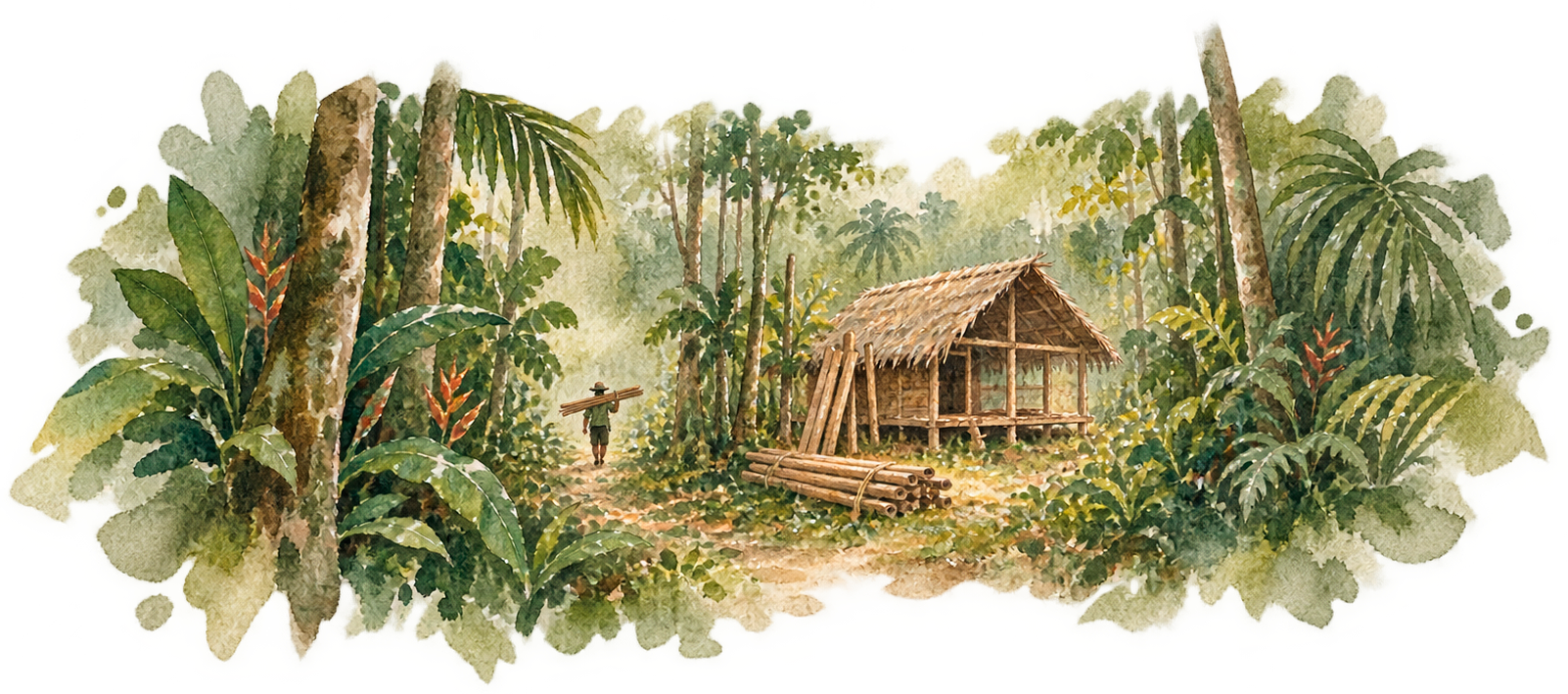
He arrived more than thirty years ago — when the lodge was still just an pipedream — to open the trail towards the lagoon where it would later operate.

“Before, there were only monkeys and brush, ” he tells me.

The first task was to build the staff house. Then they went on to put up a first little cabin, an office, and the storeroom. It was hard work. It took a year to complete, hauling all the materials on their backs.
A couple of years later, in 1988, operations began with asingle guest.

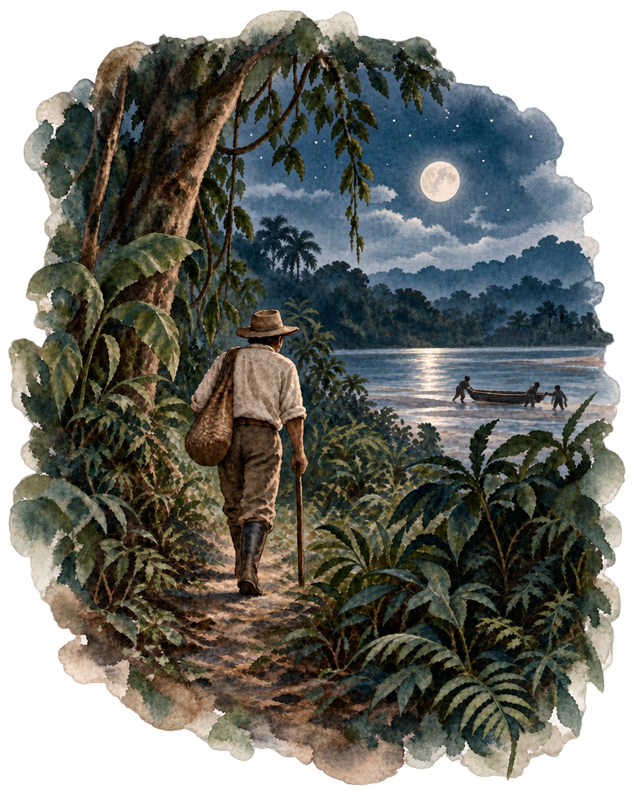
Tio José was there, setting off at two in the morning to reach Coca and then Lago Agrio. The boatmen were experts at navigating by night, but back then, when the canoes ran aground on sandbanks, everyone — even the guests — had to get out and push to free them.

Tio José belongs to the small, privileged group of people who have seen a jaguar in their lifetime.

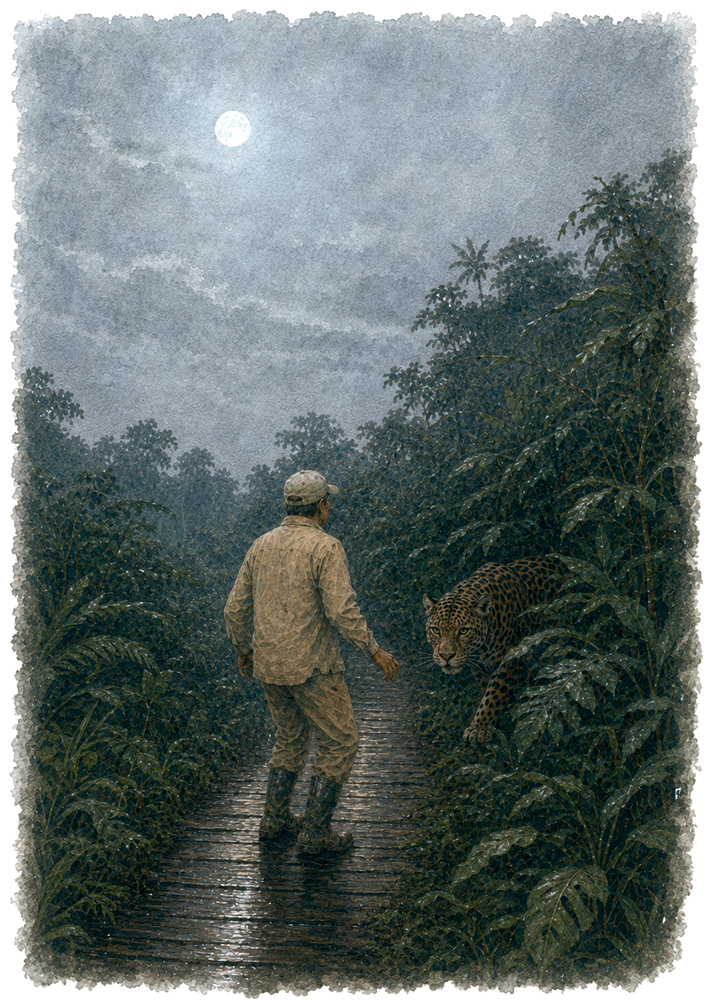
He tells me that one night, after finishing his guiding and work, he was walking home accompanied only by the moon and the stars. He thought he saw a tapir on the path; he was not afraid, he had seen many and was sure it was at asafe distance.

But within seconds, he realised it was not a tapir but a majestic jaguar, and that it was so close he could have touched it. He was terrified. Deeply.

“It was huge, a great feline; its head was enormous,”he recalls.

It was an mature jaguar, massive… which scratched his boots and tore them with its giant claws. Perhaps it was trying to play with him. We shall never know.

The jaguar roared at him and José struck it with his fist, feeling its whiskers prick his skin like thorns.

He managed to reach his house safe and sound, with a tremendous story to tell his wife and his friend, the local bird guide, who warned him never again to walk alone at night.

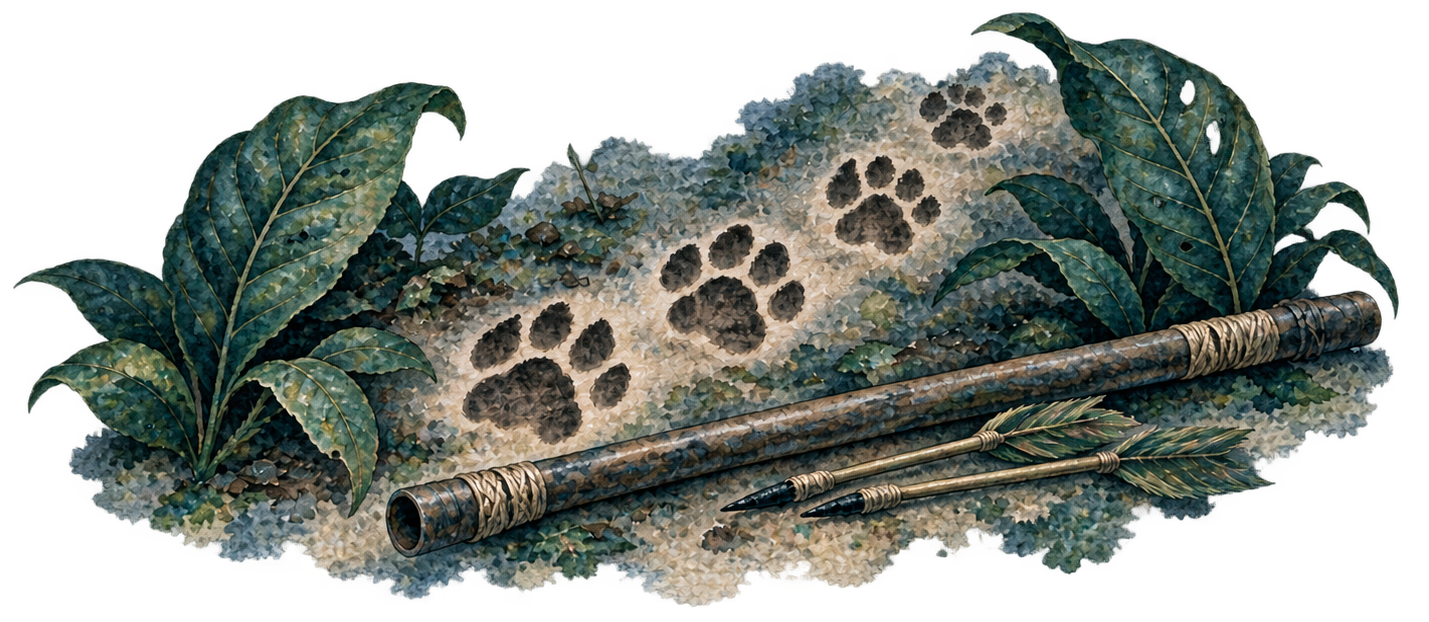
The following day, at four in the morning, on his way to work, he noticed fresh jaguar tracks along the path: the jaguar had followed him all the way home.

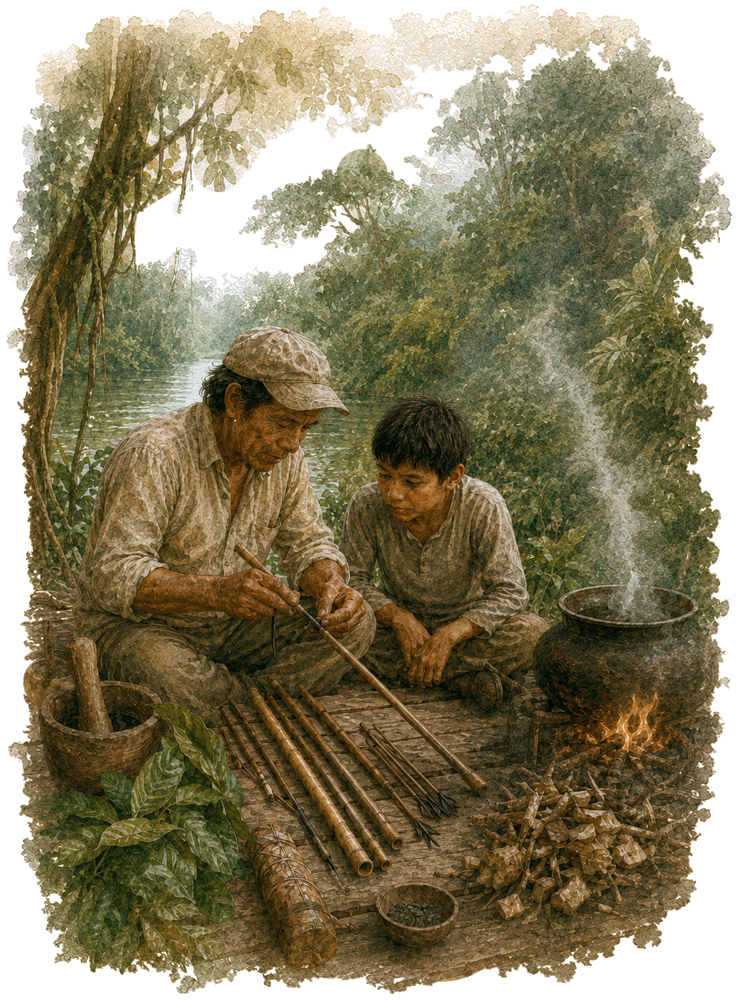
José recalled his father with affection. He had taught him how to use a blowpipe for hunting, just as their ancestors had done.

The blowpipe is a simple tube-shaped weapon that shoots darts with the force of one’s breath.

But first, the poison had to be cooked to smear onto the tip of the dart.

To do that, they would boil barbasco — a medicinal forest plant — all day long, together with poison from a venomous frog and python skin, until it thickened and turned black.

They then stored it in a pilche (a gourd from an Amazonian tree), and from there they would coat the dart with the poison, ready for the hunt.

Even so, Tio José preferred to go hunting with afourteen-shot shotgun.

Hunting was always an activity of respect and gratitudetowards nature.

Since childhood, José had hunted for food: peccaries, tapirs, wild pigs and, sometimes, monkeys.

Monkeys, however, required particular respect, because otherwise the Furi-Furi could appear — a demon that appears when someone disrespects monkeys, playing with their entrails or their heads.

It is said that the Furi-Furi sends you to sleep and then devours you, along with anyone else who was part othe mockery.

That is why his father always told him that one must never disrespect the animals.
At first, José went hunting with great fear: fear of being hunted by the jaguar.

Over time, he got used to it, and each hunt got easier.

And there wasn’t much choice in the matter. They hunted to eat.

You went out when there was no food left at home.

As Tio José says:

“If you’re afraid and sit around waiting, you’ll go hungry. ”

So he would set out early, at dawn, after packing a little chichita — a fermented drink of cassava, sweet potato and ripe plantain, traditional in the community.

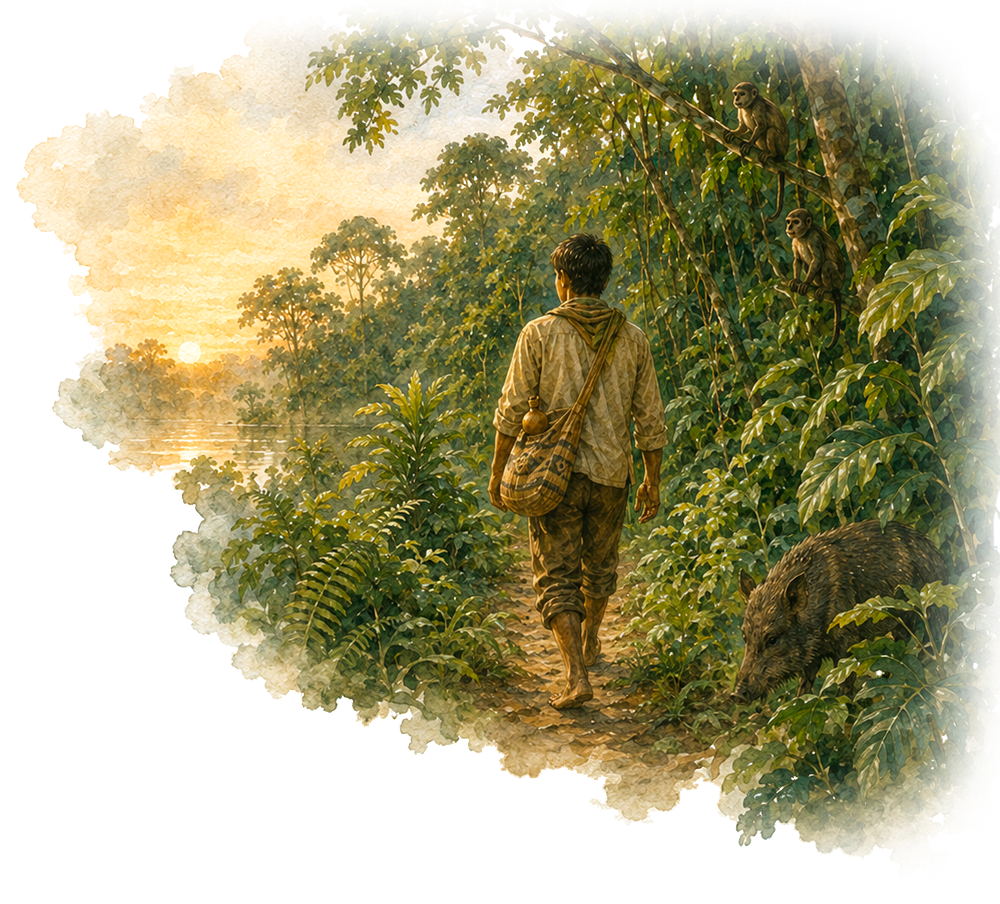
He walked north, following the tracks and scent of the peccary, with his shotgun and a burning hunger.

He would make his way miles and miles into theforest, alone.

Once he found the pig he was after, he would shoot it, hoist it onto his shoulder, and begin the return journey.

A wild pig can weigh around eighty pounds, and its meat can last, under good conditions, for roughly five days before it goes bad.

When he returned home, he and his wife would skin and butcherthe animal.

Sometimes they removed the skin with a knife; at other times they singed it and ate it with the hide still on.

They cleaned it, removed the entrails (which are eaten too), and as they cooked it, they would remove the bullets lodged in the flesh.
Then the meat went into the smoker to be preserved for about five days, during which they ate their fill until nothing was left.

These days, Tio José no longer ventures into the forest. He prefers to look after his pond of tilapia fish and his chickens, in the small house he still keeps near the lodge.

“You have to eat chicken, ” he says with a laugh, remembering his hunting days with both nostalgia and joy.

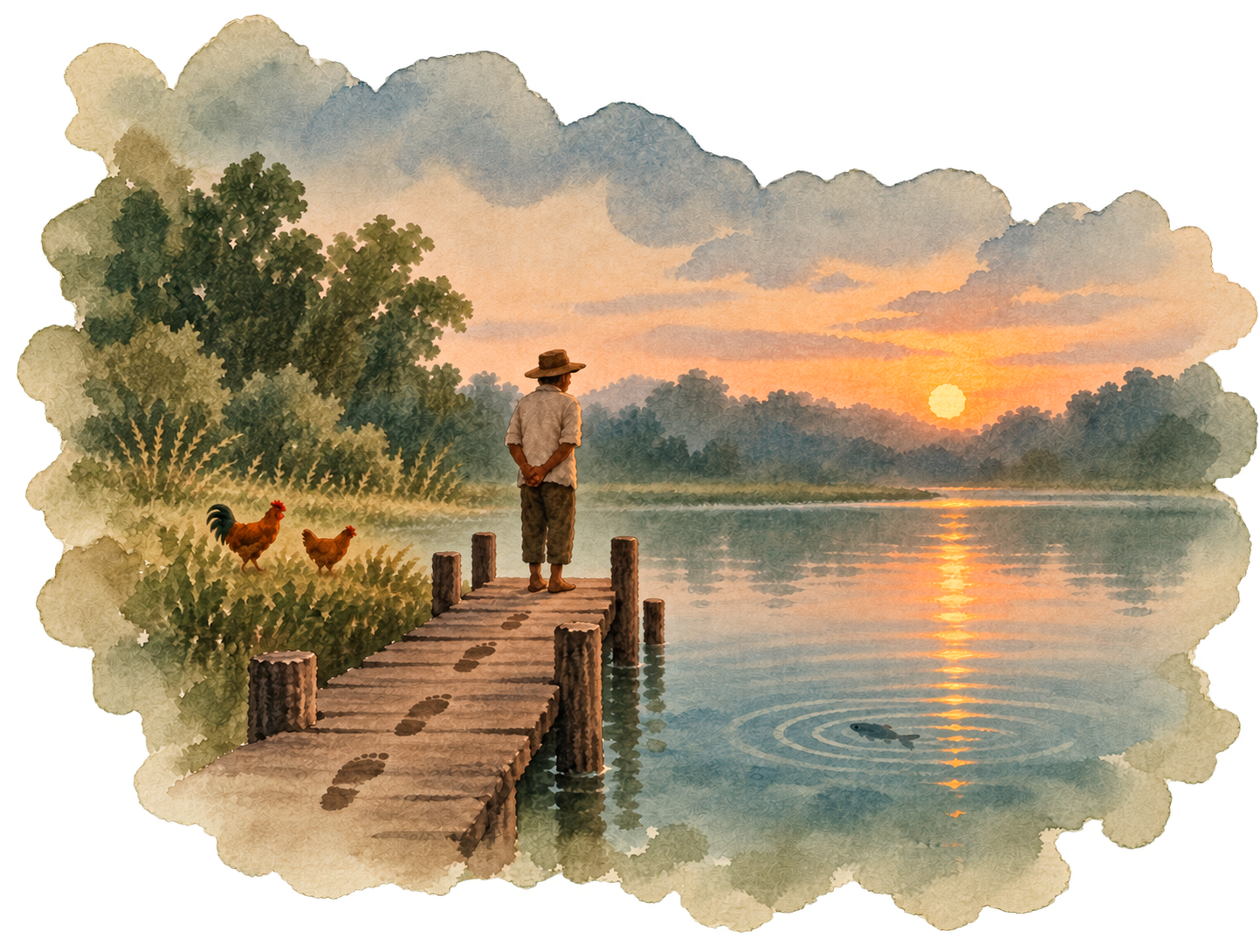
Guests sometimes see him walking near the jetty at dusk. They do not know that this calm, smiling man is the man who opened the trails they now walk on, nor that his footprints lie beneath every plank of the lodge he helped to build.

“I am still here, ” he says, a home. ”