CHAPTER FOUR

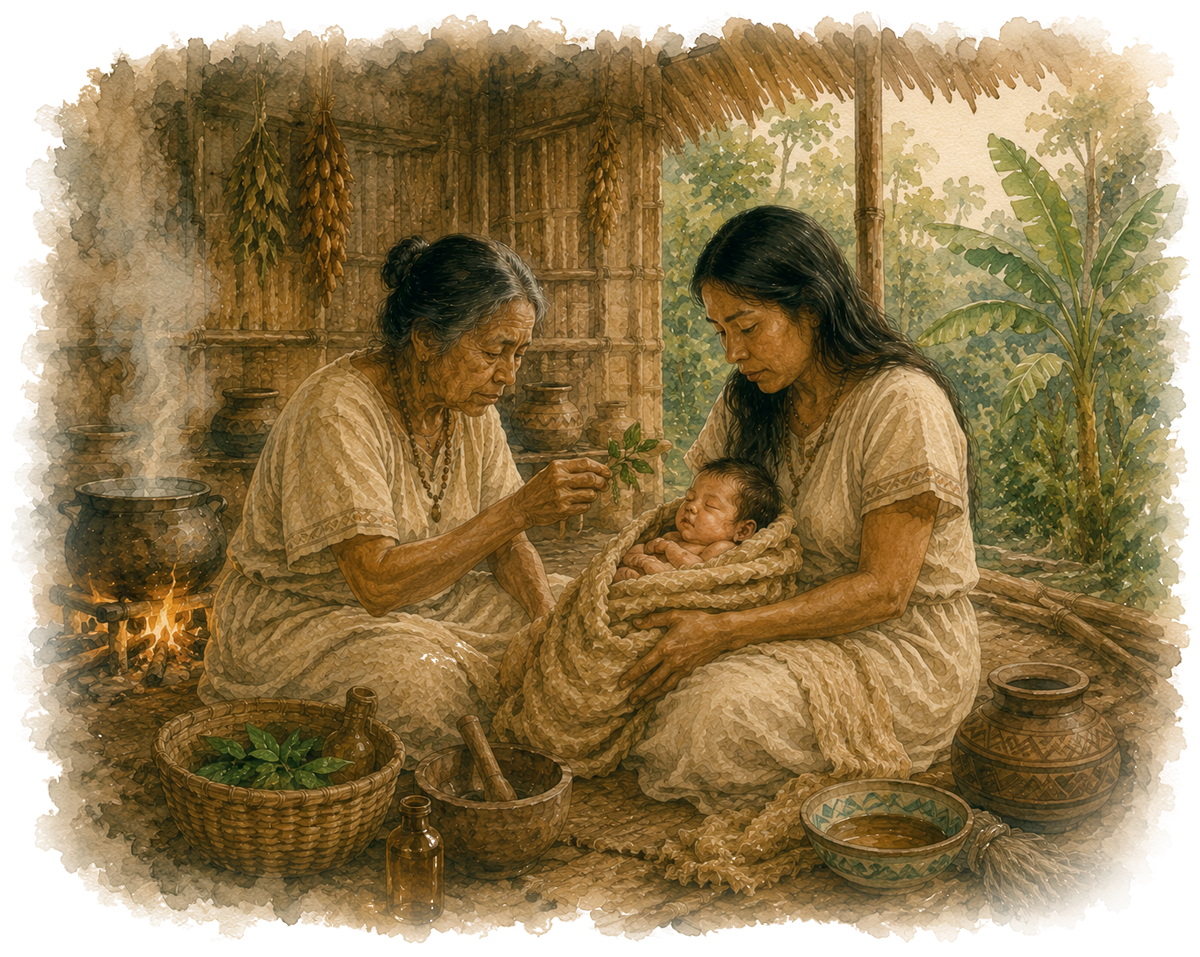
Sixty-eight years ago, in the middle of the Ecuadorian Amazon, a baby was born and given the name Silverio Alejandro Machoa Condo. It was a home birth, one of those still remembered as a profound act of community. The women hold on to a rope hung from a ceiling rafter so that the mother can push more easily, while around them fires are lit with herbs that perfume the air, accompanied by low chanting and words of encouragement.

The baby then falls into the arms of a midwife — if there is one — or into the hands of a woman, who receives this new life with trembling fingers.
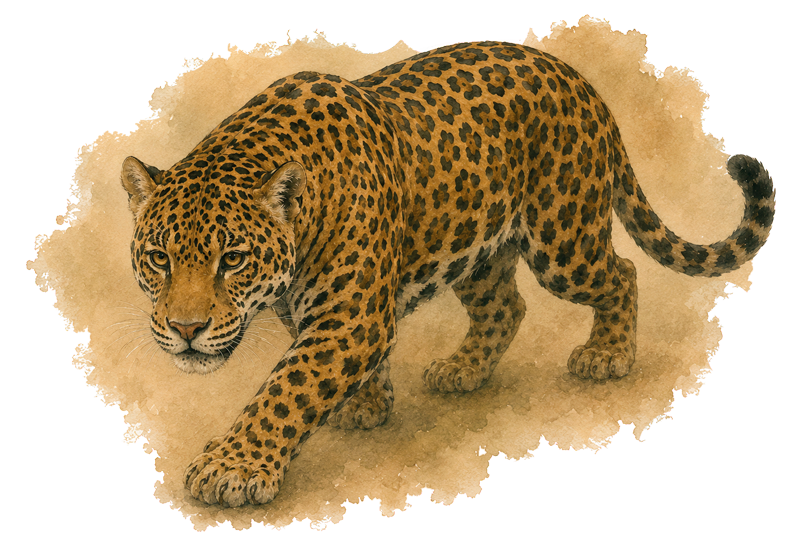
When his mother saw him in her arms, she rubbed a little puma yuyu on his navel, a very well-known herb in the forest, so that when Silverio died he would become a jaguar, his destiny set for all eternity. The puma yuyu was not just a plant: it was a pact between life and death.

By applying it to the navel, the centre of vital energy, she was sealing his fate, as it had been that of his mother, with his grandmother, and with his father.

His aunt had dreamt several times of a jaguar that told her to walk towards the chacra forest garden, where she would find something meant for her. When she woke, she would go to the spot shown in the dream and find a wild pig with a single bite to its neck, ready to be eaten. It was her brother — Silverio’s father — keeping his promise to protect her, even as a jaguar.

Those dreams filled her with both respect and fear: the jaguar could devour anyone, yet it chose to protect her.

It is said that jaguars watch over you for a couple of months, sometimes up to a year. After that, they disappear into the depths of the forest, invisible among the trees and rivers. Silverio knows he will become a jaguar, like his father and like his best friend, Uncle José, and that both will look afterthe forest.

“We’ll bite them so they don’t go out at night, but very gently,” Silverio says with half a smile, as if speaking of aharmless prank.

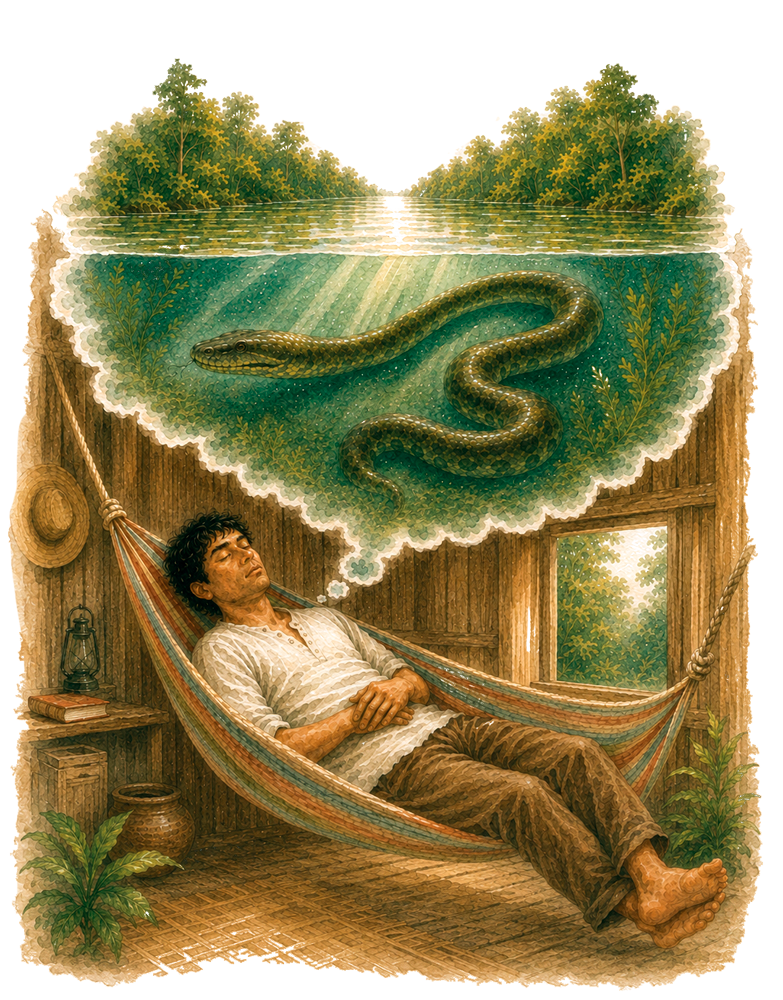
But just as there are good spirits, there are also bad ones. It all depends on dreams. That is why his ancestors would wake at three in the morning to talk as a family about what they had dreamt.

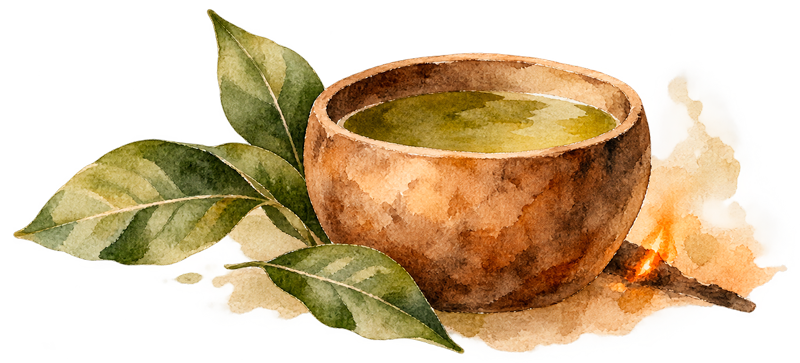
A small fire was lit in the centre of the house, a pilche of guayusa leaf was served, and they shared every remembered word. The guayusa, bitter and intense, helped them stay awake and cleanse the body; it imbued them with energy and repelled snakes.

Discussing dreams was not simply a way to pass the time: it was how they decided the course of the day. If, for instance, the plan was to go fishing and the dream had been about nets and many fish, that was a good sign to go ahead. But if anacondas appeared in the dream, better to stay home.

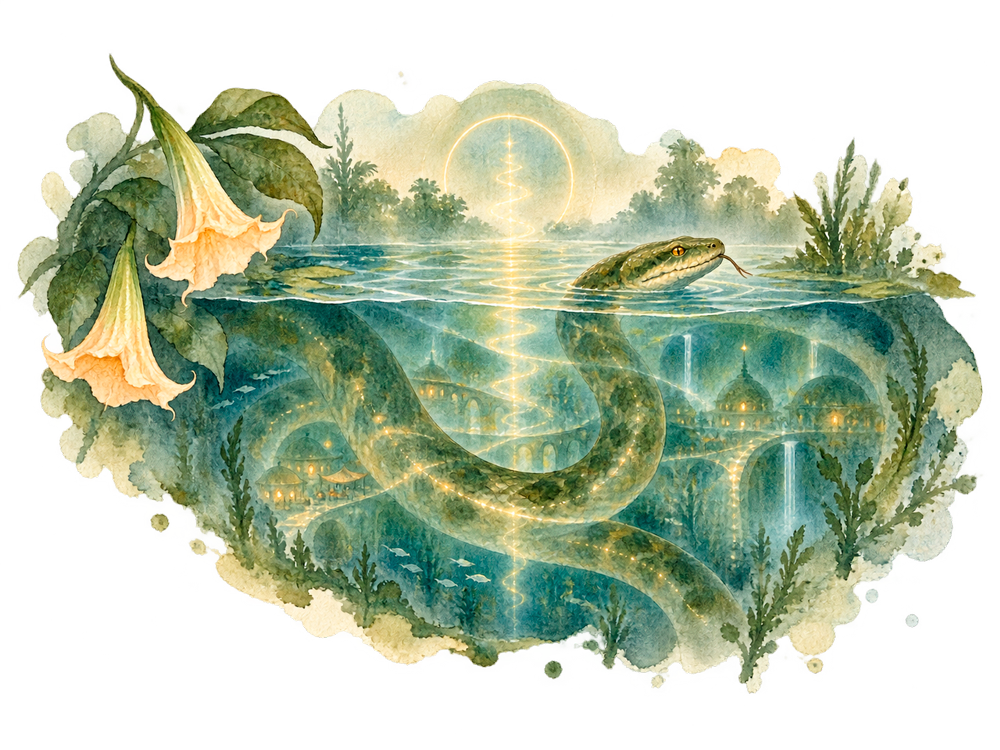
Anacondas are people like us who live beneath the lagoon, in a great city where they have everything: houses, cars, even markets where they buy provisions.

Shamans can see them.

So can Silverio.

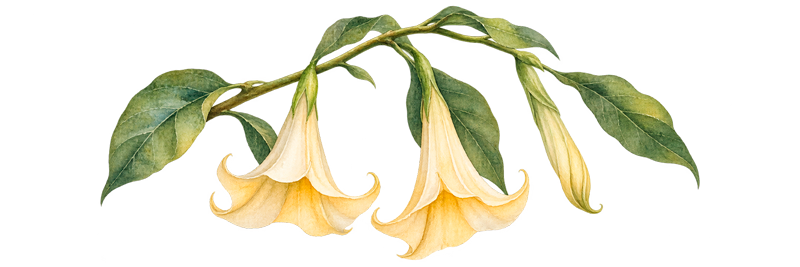
Wando floripondio is a plant that helps you see the present, the future, and the anacondas.

“Twenty-four hours after taking it, you start to see everything. The body falls asleep, as if it were dead; only the heart keeps beating, but the flesh is dead, ” Silverio tells me, his voice slow and his gaze fixed on the ground, as though still watching what he describes.

He speaks of how incredible teleportation can be, of crossing into other realms, worlds, and of a host of experiences that
are hard for the human mind to grasp, includingseeing anacondas.

Dreaming of anacondas is always a bad omen, because they take people away.

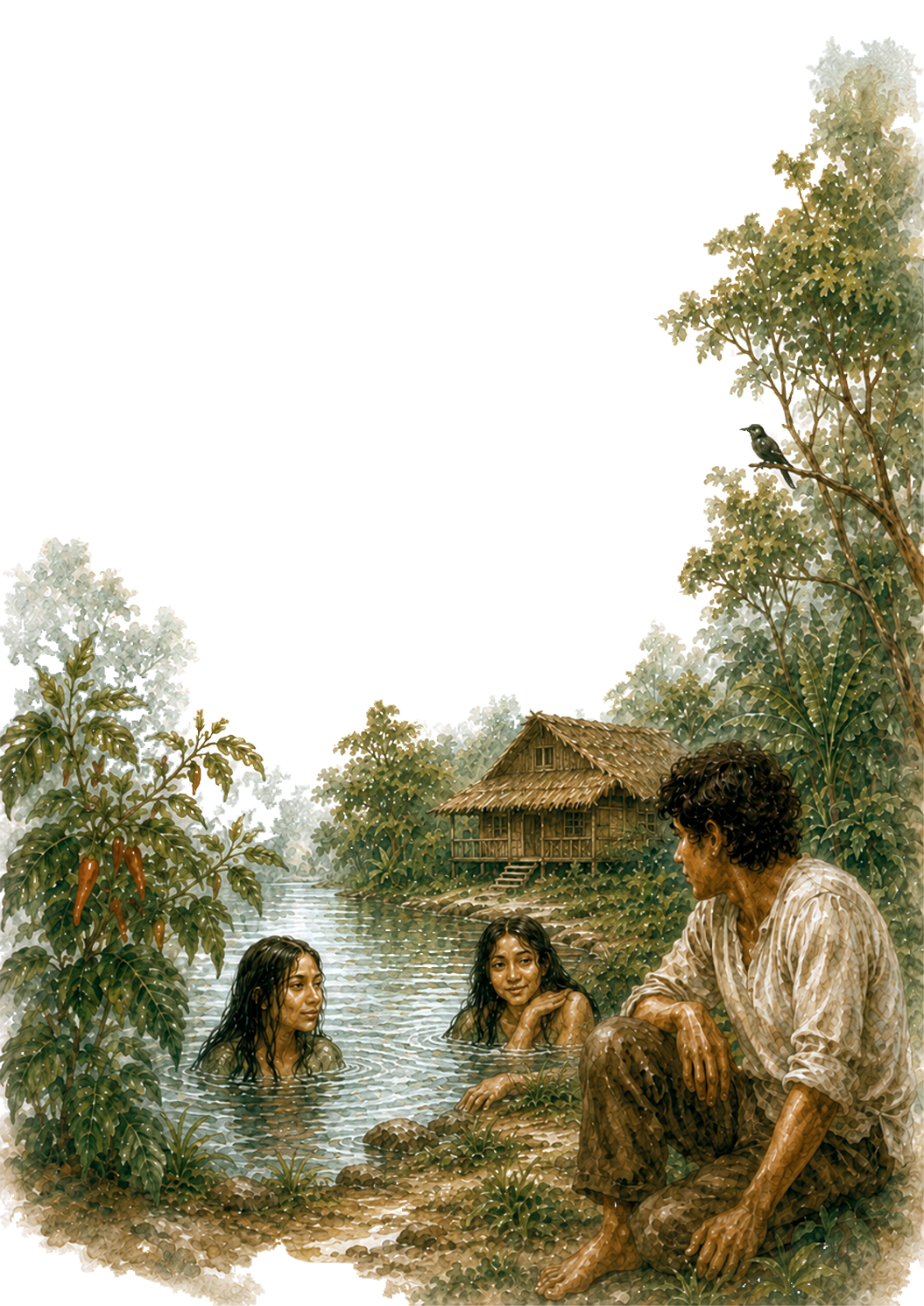
Once, a young man from the area dreamt of a chilli plant visited by two beautiful girls with long hair. They were two water boas.

The boy awoke, and there they were: the two young women, watching him. The dream had become reality. He panicked, tried to run away, and, after a struggle, ended up staying with one of them for many years.

His relatives, whenever they visited, would wonder how a bachelor living alone could have so much: a well-furnished, cosy house, cassava crops in his garden, a life which clearly showed that someone else lived there, someone who hid away every time they arrived — because she wasan anaconda.

Time passed and the couple had a baby.

The man’s mother, delighted to have a grandchild, visited frequently. They played a great deal, until one day she helped change the baby’s nappy. On his back, around the lower spine, his skin had a rough texture like that of a reptile.

“He’s not a baby, he’s the child of an anaconda, ” the woman cried out, frightened.

This angered the boa, who took them all beneath the water to live in her city, leaving everything spotless.

Years later, when the child was about three, theyvisited again.

No one was there, only the boy, playing by himself.

When they asked him where his mother and father were, he pointed to the ground, meaning they were beneath the earth, most likely in the lagoon.

Silverio talks about these things naturally. Sometimes he smiles, sometimes his voice drops down an octave. He says you no longer hear as many stories as before, that the demons no longer appear in the trees “chatting like the misters” . Yet he mentions these things, these experiences, like someone who knows they are still out there, waiting for someone to listen to them again.

Silverio was one of the founders of the lodge. He helped to raise the first structures when there was little more than a clearing among the trees. He says the jaguars, his relatives on the other side, watched over every step of that process.

Today, when the sun sets over the lagoon and the tourists return in their canoes, Silverio — now retired — sometimes sits in silence, watching the reflection on the water. He knows that, when the time comes, his spirit will continue to wander there, looking after those who come to hear the stories that gave birth to this place.